A local installer who puts in water heaters gets your project.
A gas or electric water heater in Maine usually lasts 8 to 12 years. Tank age matters less than what's feeding it. Most homes here heat with oil, so the water heater is often running on its own, separate from the furnace, and that changes when it's worth replacing versus repairing.
Power in Maine costs more than in most of the country. An aging electric water heater loses efficiency as the tank scales up and the elements work harder to hold temperature, and that shows up on the bill before the tank actually fails. By the time you notice lukewarm water or a popping sound from sediment, you're already paying for the decline.
If yours is approaching that 8 to 12 year mark, or you don't know when it was installed because it came with the house, it's worth finding out where it stands before it fails on a cold morning. That means calling around to plumbers, explaining the make and model and how old the unit might be, waiting on quotes, and sorting through who actually installs water heaters versus who just lists it as a service.
This page skips that part. Tell it about your water heater and your home, and it matches you with a contractor who installs water heaters in your area. That contractor will reach out to you directly. No repeating the same explanation to five different companies, no guessing which quote is realistic for a Maine install.
What happens after that call, the exact work, the timeline, the price, is between you and the contractor. What this page does is get you to that first conversation without the legwork.
How long does a water heater last in Maine?
You want a number to plan around. Maybe the water heater is making noise, maybe it's just old, and you're trying to figure out if it's worth watching or worth replacing now before it fails on its own schedule.
8 to 12 years, often on the lower end if it's electric
The tank itself wears out from the inside, where minerals settle and the anode rod slowly gives itself up to protect the steel. Once that rod is spent, the tank starts rusting and there's no fixing that. Because most homes in Maine heat with oil, the water heater usually runs on its own power supply, separate from the furnace. Electric water heaters here tend to work harder against the cold groundwater coming in, which can push them toward the shorter end of that range. Gas units often last a bit longer. Either way, past year 8 it's worth paying attention to rust-colored water, a tank that's warm to the touch, or a popping sound when it heats.
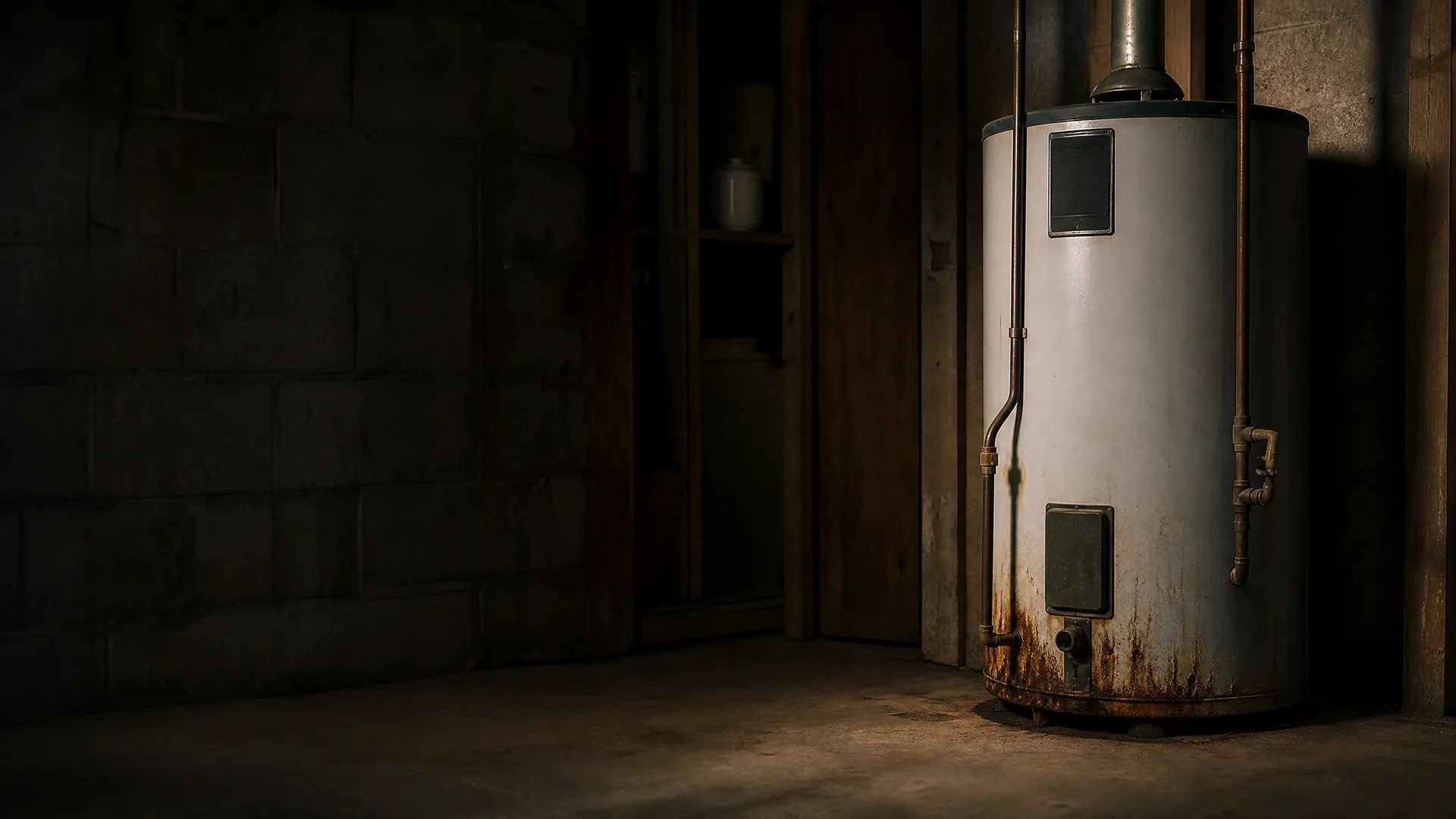
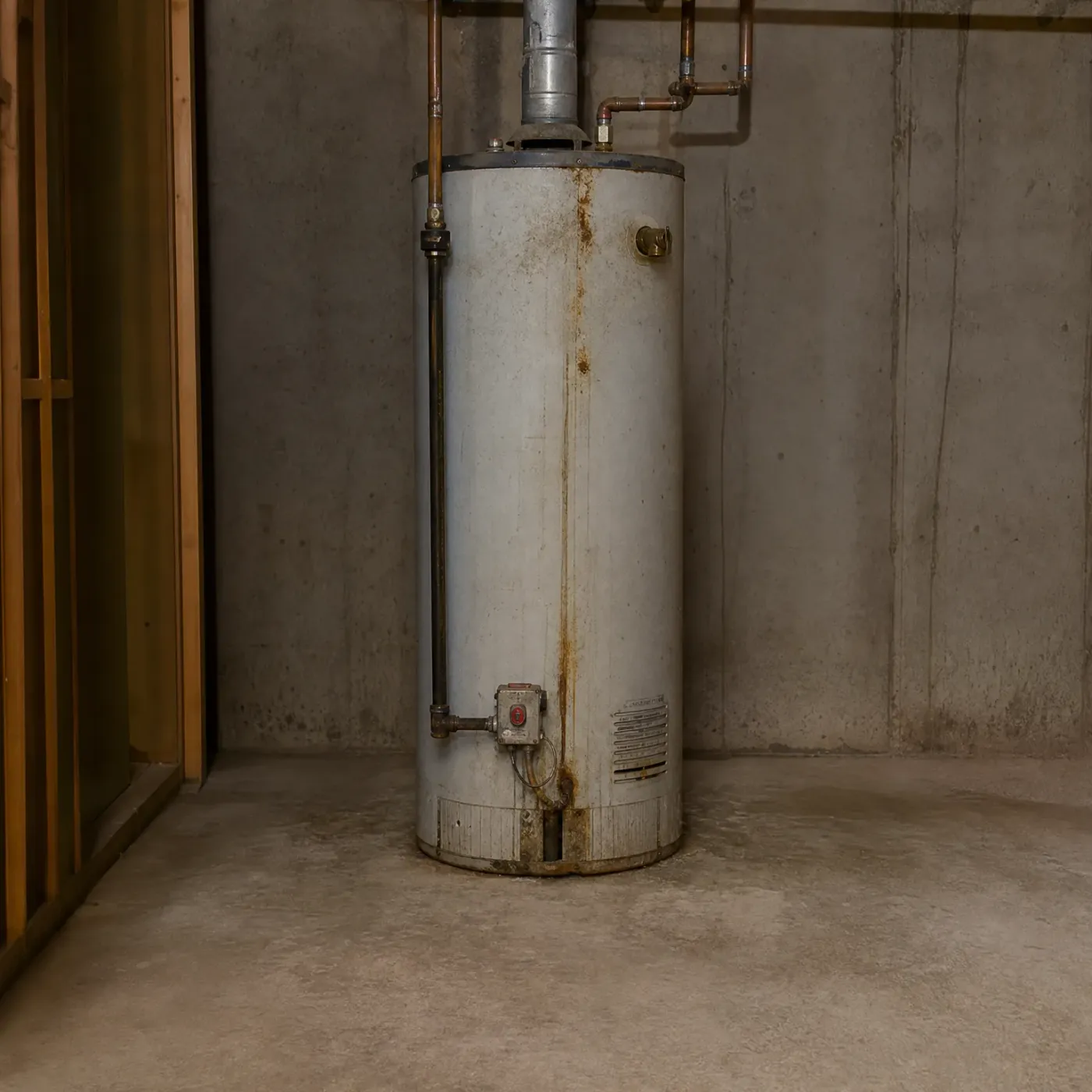
You go down to put a load in the washer and the light's still on from the kids earlier. It's past eight, dark already, that early-evening dark Maine gets most of the year. The tank sits in the corner the way it always has, and this time you actually crouch down to look at it. Rust streaks run down from the seam near the bottom, dried in lines like something leaked and stopped, or never stopped. You touch one and your finger comes away orange. You stand there a second, not sure if this is the kind of thing that waits until Saturday or doesn't. You think about who you'd even call, and whether they'd have time this week, and you go back upstairs still turning it over.
That water heater in the corner has been running on its own meter this whole time, apart from whatever's keeping the house warm, and with power rates here among the highest in the country, an old unit losing efficiency costs you more every month than it would somewhere else. Twelve years in, you're not just watching for a leak. You're deciding if it still makes sense to keep paying to run something this worn. Getting a straight answer usually means calling a few places, explaining the tank's age and what it's doing, waiting on callbacks, and lining up quotes that don't quite compare to each other. You don't have to do that part. Ask once here and a contractor who installs water heaters in your area follows up, looks at what you've got, and tells you straight whether it's worth replacing now or riding out another year. That's the part worth handing off. The tank itself still needs a decision, and better to make it before it fails on a cold night instead of after.
Why the tank itself wears out
A tank water heater fails from the inside. The glass lining inside the steel tank keeps the water from eating through the metal, and no lining covers every spot forever. Once it wears through, the steel underneath starts to corrode, slowly at first, then as a leak. A sacrificial anode rod is built in to take that corrosion instead of the tank, and it gets used up over the years doing that job. Once it's spent, the tank itself is next. That's the real clock running on your water heater, not the thermostat or the burner.
What Maine's water adds to that
How fast that lining wears depends partly on what's running through it, and groundwater in Maine tends to carry more sediment than water drawn from a reservoir or treated municipal source. Sediment settles at the bottom of the tank, and on a gas unit it sits right over the burner, which has to work through that layer to heat the water above it. That's extra wear on top of the lining's own aging. It's also why a tank making popping or rumbling sounds is usually closer to the end of its 8 to 12 years than the start of it.
Watching it a little longer
If the tank is heating fine and nothing's leaking, you can keep an eye on it instead of replacing it outright. Check the area around the base for dampness, listen for popping or rumbling when it heats, and keep track of how old it is if you know the install date. This costs nothing up front and a tank in decent shape might run another year or two without trouble. The risk is that tanks usually don't give much warning before they fail outright, and a leak that starts while you're at work or asleep can mean water damage to the floor and whatever's stored nearby.
Replacing it on your schedule
Replacing a water heater before it fails means picking the day instead of having it picked for you. You can compare gas and electric, size the tank to your household, and get it installed when it's convenient rather than during a flood. It costs more now than doing nothing, but you avoid the cleanup and the scramble to find anyone available same-day. Given how expensive power is in Maine, a new unit also tends to run more efficiently than one that's ten years old and losing ground, which shows up on the bill either way.
Before you get your water heater installationAfter you get your water heater installation
55.3% of homes statewide heat with fuel oil
Most houses around you heat with oil, not gas, so your water heater is almost always its own separate unit running on electricity. That means its lifespan isn't tied to your furnace at all. It ages and fails on its own schedule, so it's worth checking on its own.
ACS 2020-2024 5-year B25040
Eight to twelve years is the range to plan around, and the number that matters more than its age is what you've seen with your own eyes: rust in the water, a popping sound when it heats, dampness at the base. A tank that's quiet and dry at year nine can keep going. A tank with a soft spot or a slow drip at year seven is done, whatever the calendar says. Since it runs on its own meter separate from the oil furnace, it's worth a look on its own schedule, not whenever you happen to think of it. When it's time to replace it, you're not stuck calling around to different companies, explaining the same thing to each one, and lining up quotes to compare. You get matched with a contractor who installs water heaters in Maine homes, and they'll reach out to you directly.
Water Heater Installation
A water heater pro near you
Skip the round of in-home estimates for a new water heater.