Maine Hot Water
Profile view of a bearded man wearing a black baseball cap and a dark gray T-shirt against a plain light background.

How often to flush a water heater in Maine

Step 1 of 3: Equipment

Once a year is the right interval for most homes in Maine. Flushing the tank clears out the sediment that settles at the bottom, and Maine's water carries enough mineral content that this buildup happens steadily whether the tank is gas or electric. Left alone, that layer sits between the burner or element and the water, so the heater works harder and runs longer to reach the same temperature. With power here among the most expensive in the country, that extra run time shows up on the bill. Sediment also traps heat against the tank bottom, which wears at the lining faster than clean water would. A tank flushed every year tends to hold its heat better and last longer than one that never gets touched. If your water comes from a private well rather than a town system, check with whoever installed your heater, since well water sometimes carries more sediment and can call for flushing twice a year instead of once.

A smiling man in a gray long-sleeved shirt stands in a kitchen looking to the side, with open shelves of dishes, a white mug on the counter, a potted plant, and a view through a doorway into a living room.
A smiling bearded man in a green sweater sits at a white marble kitchen island with a mug, potted plant and bowl of fruit, in a bright white interior with open shelving and an arched doorway.
A smiling man with dark curly hair and a beard, wearing a dark green knit sweater, stands at a white marble kitchen counter with a dark blue mug, with open shelving, pendant lights and a houseplant behind him.
A smiling man in a green ribbed sweater stands behind a wooden table holding a ceramic mug of coffee in a kitchen with white subway tile, shelves of potted plants, and a bowl of fruit.

Water enters the tank cold and the coolest spot is the bottom, so that's where everything suspended in it ends up. Over months that layer thickens, and it sits right where the heat is applied. On a gas tank, the burner underneath has to push its heat through that layer before the water ever feels it, so it runs longer than it should. On an electric tank, the lower element can end up buried in it, working inside its own insulation, and that shortens its life. Draining the tank through the drain valve carries that sediment out with the water instead of letting it harden against the tank floor. If you've heard the tank rumble or pop while it's heating, that's usually water trapped under the sediment coming to a boil, not the heater giving out. Before you drain it, shut off the cold water supply and open a hot tap somewhere in the house to relieve the pressure, so the tank doesn't pull in fresh water and kick sediment back into suspension while you're working.

Where the sediment goes

  • Sediment settles at the bottom of the tank first, below the burner or lower heating element, because that's the coolest part of the water.
  • Draining the tank through the drain valve pushes that sediment out with the water instead of leaving it to bake onto the tank floor.
  • On a gas water heater, a thick sediment layer sits between the burner and the water it's supposed to heat, so the burner runs longer to do the same job.
  • On an electric water heater, sediment can bury the lower element, and an element working under that insulation wears out faster than it should.
  • A tank that rumbles or pops when it heats up is usually trapped water boiling under a layer of sediment, not a sign the heater is failing.
  • Shutting off the cold water supply and relieving pressure at the hot taps keeps the tank from refilling with sediment stirred up mid-drain.
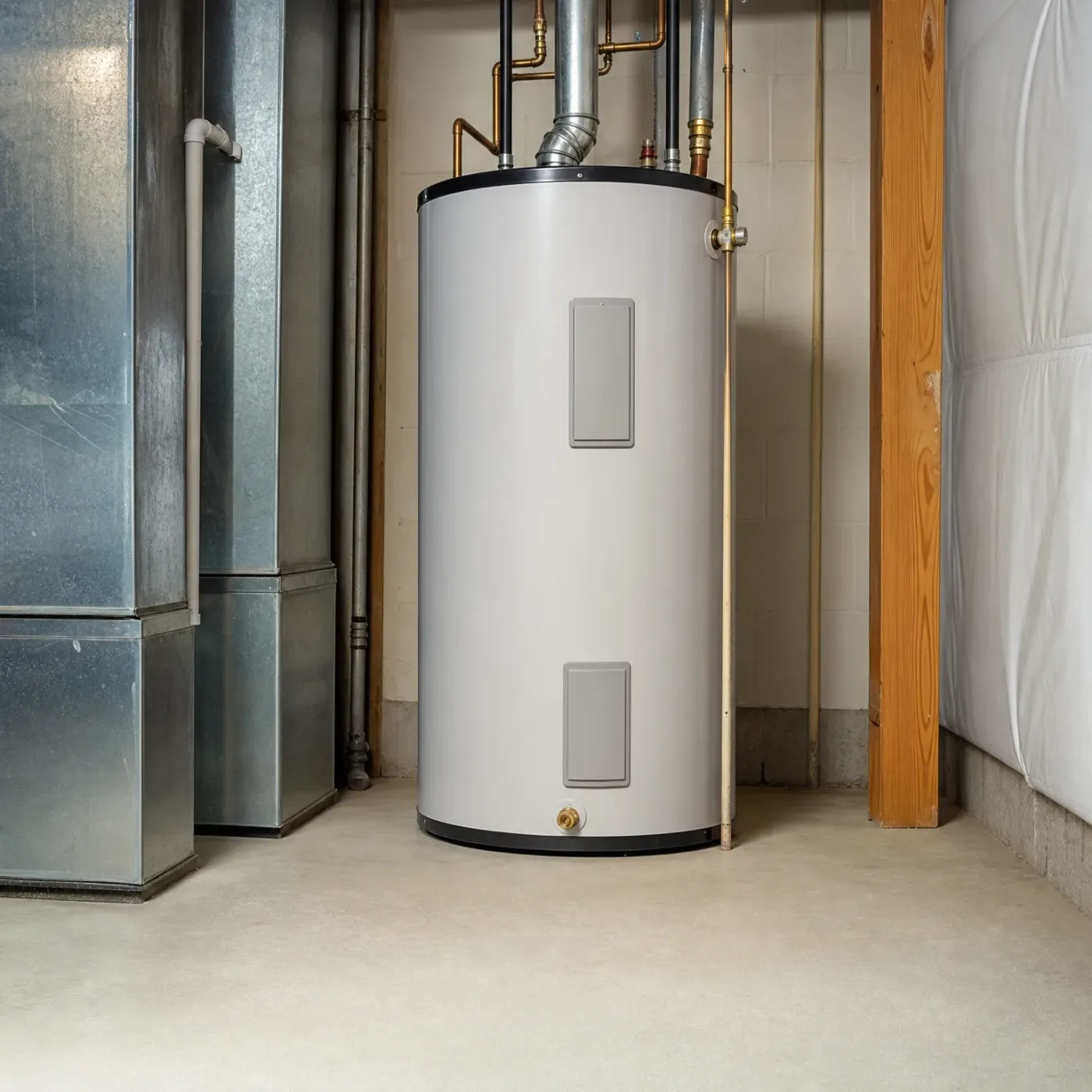
A white cylindrical water heater with two access panels stands on a concrete floor in a basement corner, beside galvanized ductwork, copper and metal pipes, a wooden post, and a concrete block wall.
Flush yours once a year and the tank stays clear, with no popping or rumbling from the bottom and no strain on the element or burner.
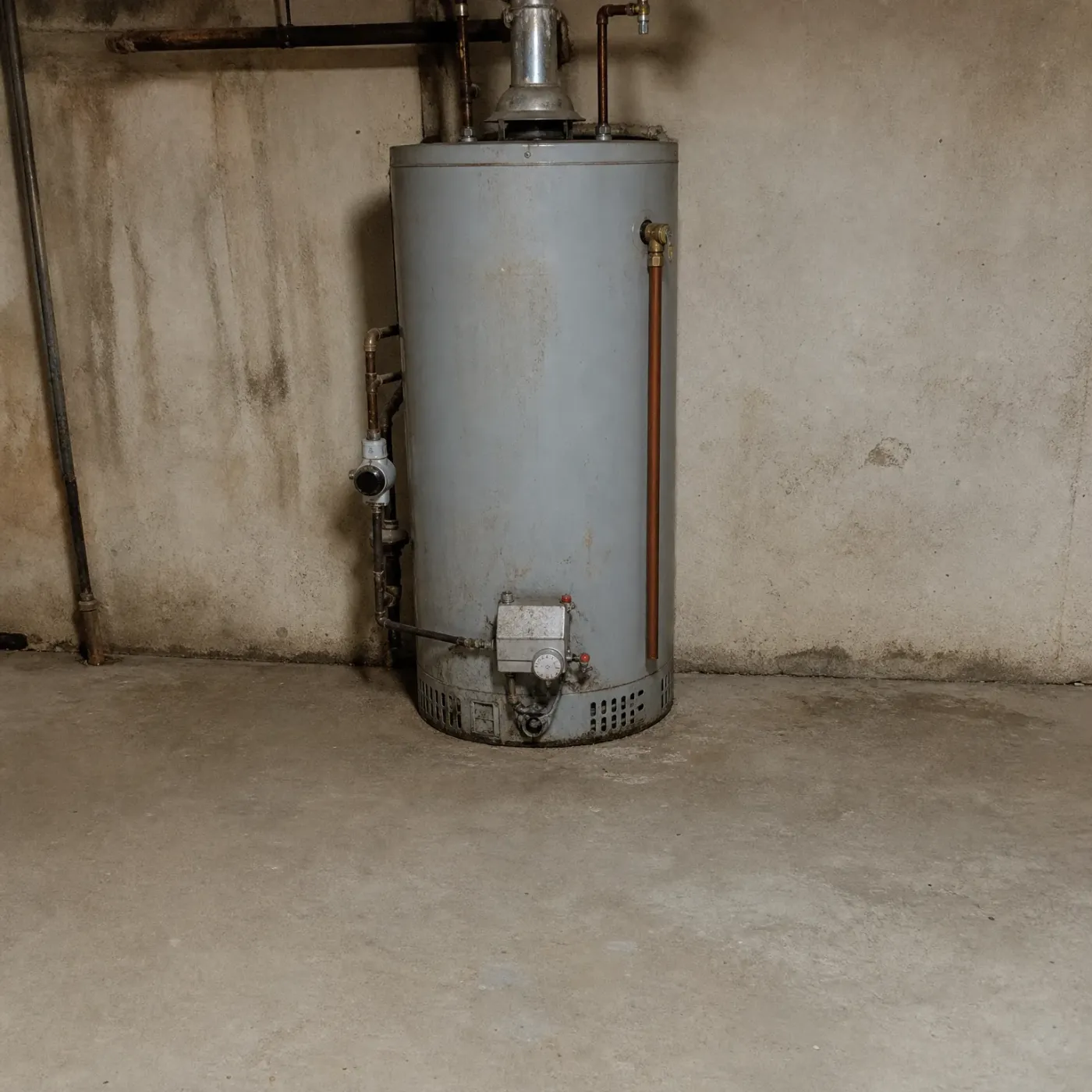
An older gray cylindrical gas water heater with copper and steel piping and a flue, standing on a concrete floor against a stained concrete wall.
Skip a flush or two and sediment hardens along the bottom, forcing the burner or element to work through a layer of scale to heat the water above it.

Gas vs Electric: Flushing Differences

Gas water heater

  • The burner sits under the tank, so sediment piles up right against the surface that heats the water.
  • A thick layer at the bottom forces the burner to run longer to get the same heat through.
  • That popping or rumbling sound you might hear is water trapped under hardened sediment, boiling against the steel.
  • Flushing is done cold, with the gas supply off and the pilot or control set to off before you open the drain valve.
  • A tank that's never been flushed may have sediment packed hard enough that the drain valve clogs before it empties.

Electric water heater

  • The lower heating element sits down in the sediment, not above it, so buildup surrounds the element directly.
  • A buried element has to push harder through scale to heat the water, and that shows up on your power bill given what electricity costs in Maine.
  • Enough sediment around the element can burn it out well before it would otherwise fail.
  • Flushing means cutting power at the breaker first, since the element can burn out if it runs dry during the drain.
  • Electric tanks often sit in a basement or utility closet, so a slow drip during flushing is easy to miss until it's pooled.
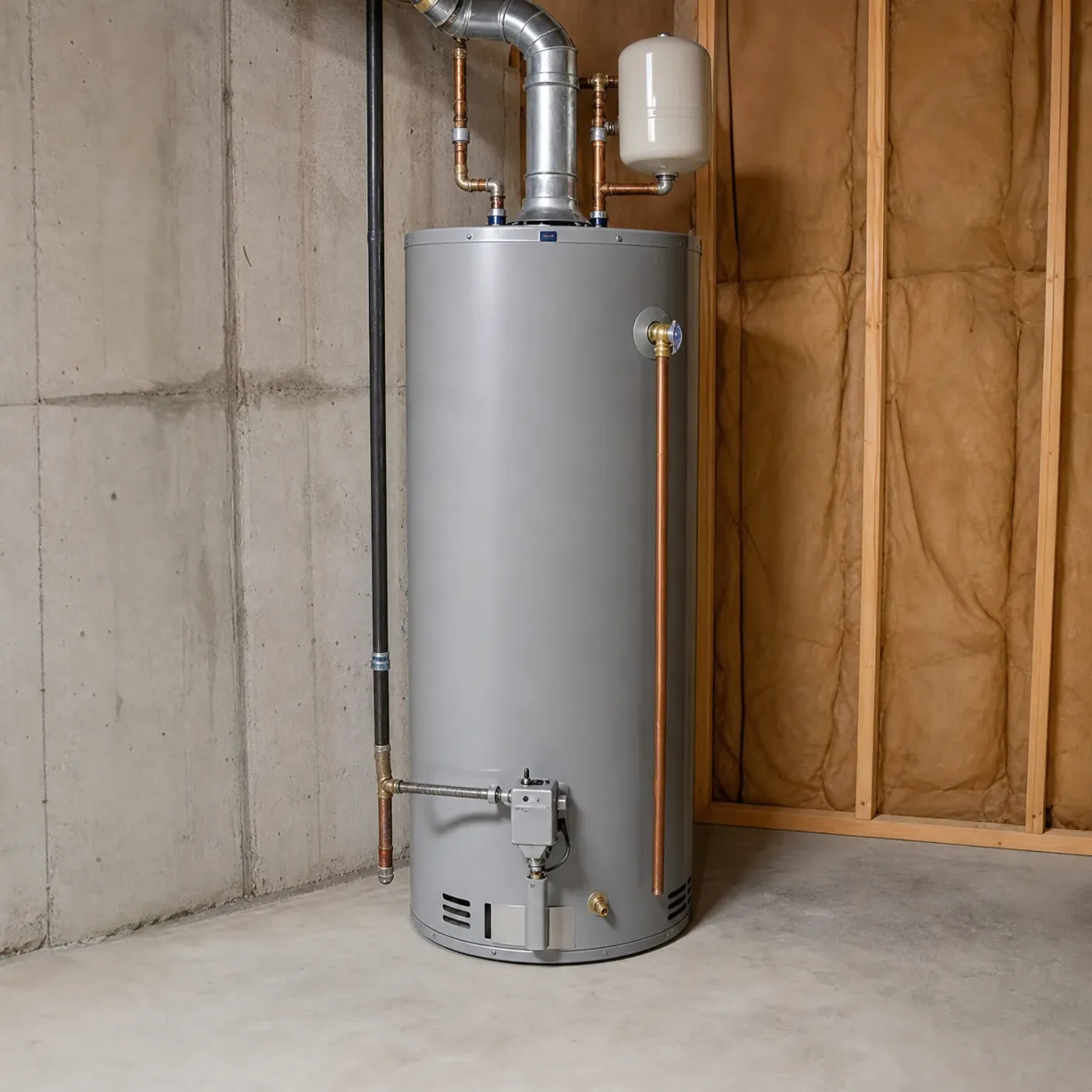
A gray cylindrical gas water heater with copper piping, flue vent, and a small expansion tank stands in a basement corner between a concrete wall and an insulated stud wall.

Tank flushed on schedule

This is what a water heater looks like when it's kept up. Pipes and valves connected clean, nothing straining underneath. A tank flushed once a year stays this way for the long haul, no matter if it runs on gas or electric.

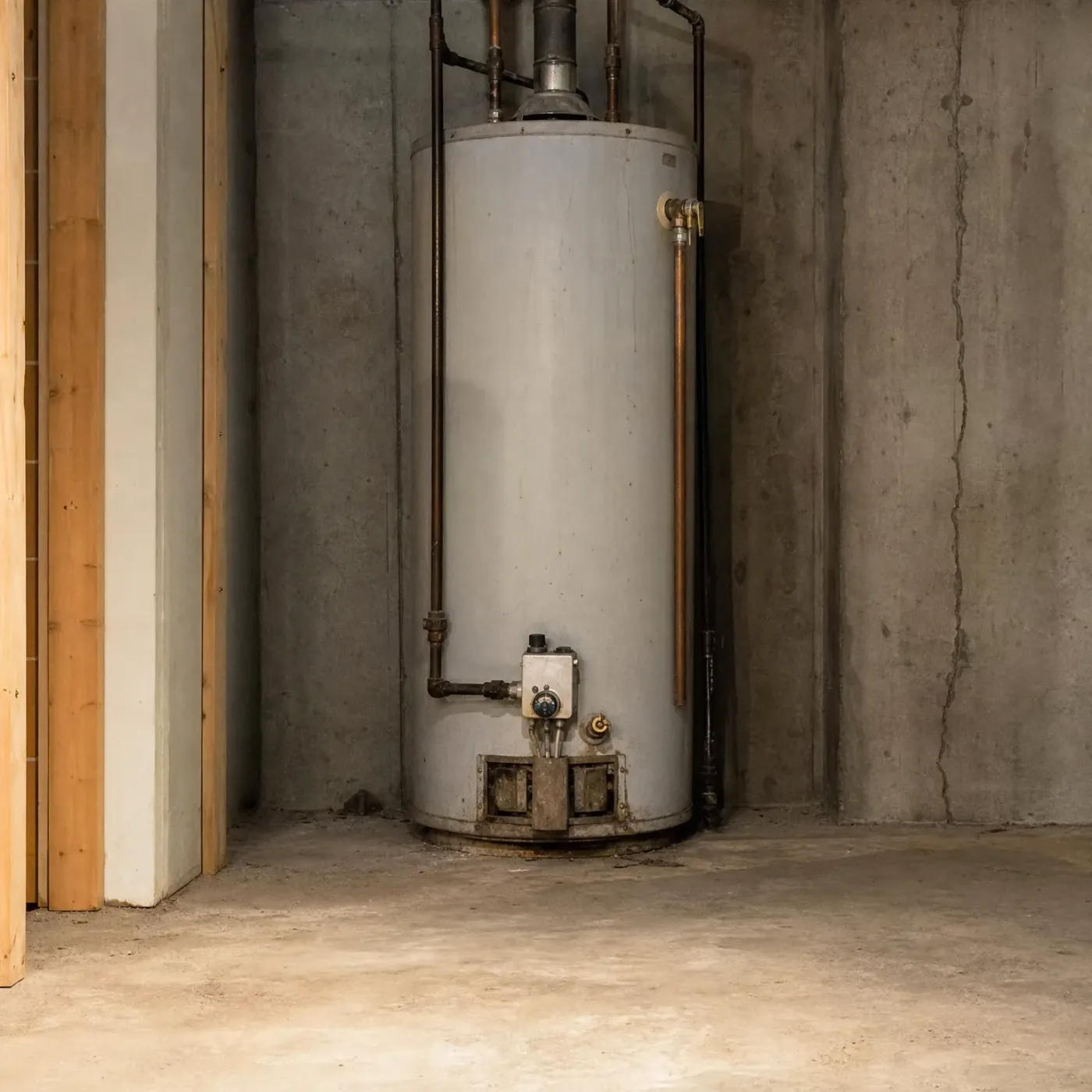
An older gas water heater with copper and black pipes stands in the corner of a bare concrete basement next to a wood-framed partition wall.

Years without a flush

This tank has gone years without being drained. Sediment has settled hard at the bottom, and the gas control valve has to push harder to get heat through it. In an old basement like this, that strain shows up first as noise, then as a shorter life for the tank.

A man in a blue T-shirt sits on a light gray sofa, laughing while looking at an open laptop in the foreground, with a framed picture, lamp and potted plant behind him.
A bearded man in a blue and brown plaid flannel shirt stands indoors looking out a window at snow-covered trees, with a ceramic mug on the windowsill.

Let someone else find the pro

A licensed local pro takes the request for your water heater tune-up.

You're not committing to anything by asking.

A gray cylindrical electric water heater with two access panels stands in a corner of a room with a concrete floor, connected to overhead pipes and a white drain pipe, beside a plain light-colored wall.

Oil heat leaves the tank alone

Most homes in Maine heat with oil, so the water heater usually runs on its own separate gas or electric setup, working all year without a break. That means it never gets an off season the way a furnace does. Sediment keeps settling every week of the year, not just in winter, so a yearly flush is the only thing that clears out what twelve full months put there.

A tall cylindrical water heater with copper and metal pipes at its top stands against a plain beige interior wall on a concrete floor, beside ductwork and a raised concrete step.

Every degree costs more here

Power in Maine runs among the highest rates in the country, so a water heater working harder shows up fast on the bill. A layer of sediment at the bottom makes the burner or element run longer to push heat through it. Flushing the tank clears that layer out, so the heat gets to the water directly instead of through a buildup that's costing you to heat around.

55.3% of homes statewide heat with fuel oil

Most houses in Maine run oil heat, so the water heater is doing separate work year round on its own gas or electric line, not riding along with the furnace. It never gets a break where sediment stops building, which is why that yearly flush matters regardless of what fuel your tank uses.

ACS 2020-2024 5-year B25040

Once a Year, Handled Right

  • Once a year keeps sediment from building up in your tank, no matter if it runs on gas or electric.
  • Your water heater runs year round in Maine since most homes heat with oil, so it never gets a break from sediment settling.
  • A local contractor who flushes tanks all year in Maine knows which models in this area tend to scale up fastest.
  • Sending one request puts you in touch with one licensed local contractor instead of fielding calls from several companies.
  • Skipping a flush lets sediment harden against the burner or element, and that's the strain a yearly flush avoids.
  • A contractor who works on this equipment every season already knows what usually fails first in a neglected tank.

A water heater in Maine doesn't get a season off. It runs alongside the oil furnace all year, and the sediment inside it keeps settling whether it's January or July. Flushing the tank once a year is what keeps that sediment from hardening against the burner or the lower element. Skip it a year or two and the tank has to work through a layer of scale just to heat the same amount of water, and that's when you hear the popping or rumbling that means it's gone on too long.

A tank that's flushed on schedule doesn't put up a fight. No strain, no noise, no element or burner working harder than it has to. That's the whole difference a yearly flush makes, and it holds true whether the tank runs on gas or electric.

Finding someone to do it shouldn't be the hard part. Submit the request once and it goes to a single contractor, licensed and working in Maine, not a handful of companies competing for the job. Someone who flushes tanks in this state every season has already seen what tends to scale up fastest here and what usually fails first when a tank's been neglected. That's the kind of familiarity that comes from doing the same work on the same equipment, year after year, in the same towns.


A dark wood cabinet with a paneled door and a ceramic pot of green foliage on top stands in a beige-walled room with white baseboard, a window at left, hardwood floor, and a patterned area rug.
A dark wood glass-front cabinet holding folded towels, woven baskets and a ceramic vase stands in a bathroom corner beside a window, with a potted fern and stacked towels on top and a freestanding tub partly visible at left.
A woven basket holding a green cushion and a cream fringed knit throw sits on a wood floor in a room corner beside a window and a dark wooden cabinet.
Corner of a room with a dark wood cabinet topped by a round vase, a linen curtain at a window, white baseboard, oak plank flooring with sunlight patches, and a woven jute rug in the foreground.
A dark wood sideboard against a pale wall holds a shallow stone bowl and a round ceramic vase with leafy branches, with sunlight from a curtained window falling across the wall, wood floor and woven rug.

One request and it's handed off

Your request goes to one pro, not a list of companies.

Get a licensed local pro

It costs nothing to send, and you don't have to hire anyone.