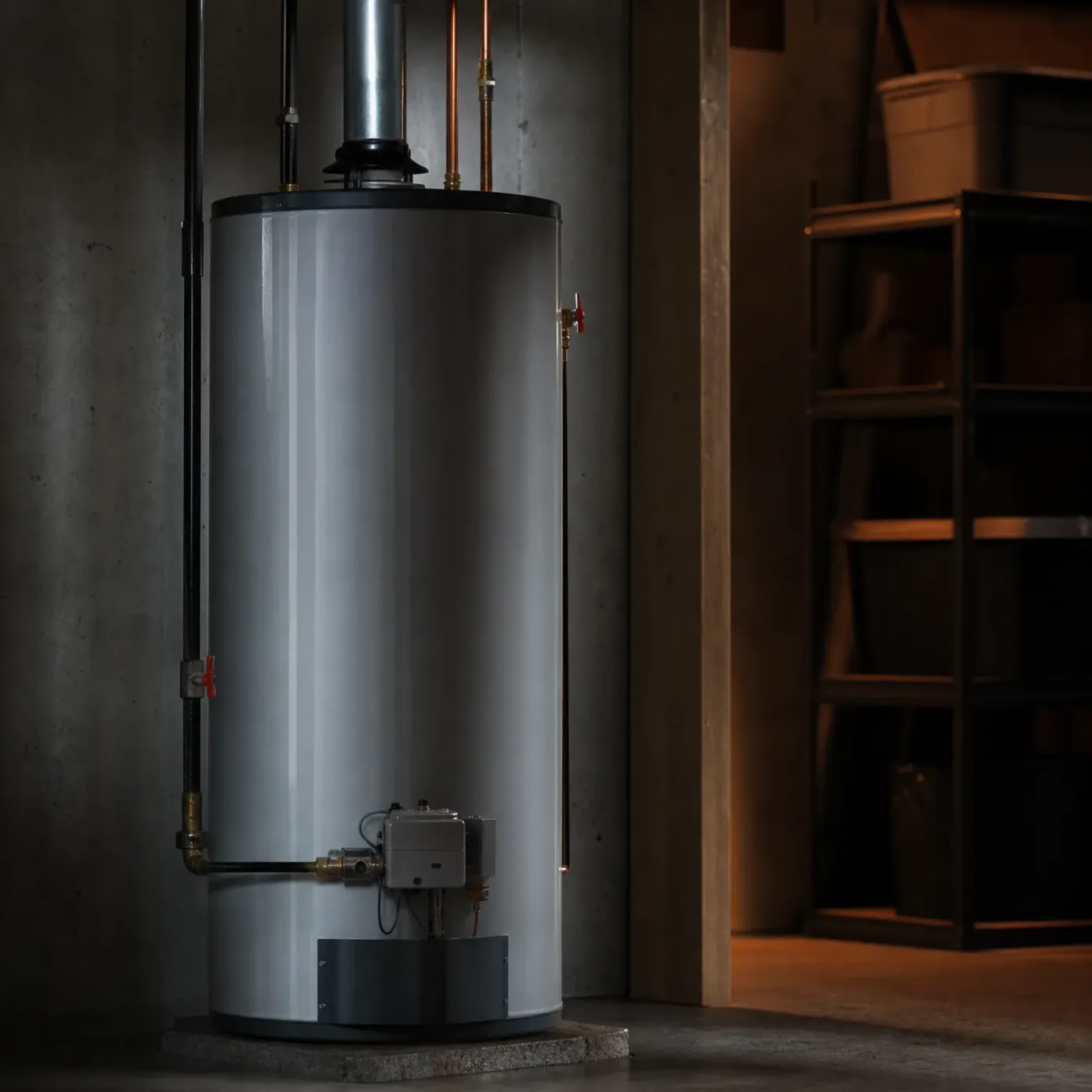
A large gray cylindrical gas water heater with copper and black pipes and a flue stack, standing on a concrete pad against a concrete wall, with a dark metal shelving unit in the background.

One form, no calling around

Tank or tankless water heater for a Maine home

Oil heats most homes in Maine, so your water heater's fuel choice matters more here than it does elsewhere, and a tankless unit changes your power draw in a state where electricity already costs more. This page gets into how tank and tankless compare for your home, and what installing one actually involves, so you're not stuck calling around to different companies, re-explaining your setup each time, and sorting through quotes to figure out who actually knows oil-heated homes.

Start one form

A tank water heater is still the better fit for most Maine homes, mainly because most of these homes heat with oil and already have a flue or fuel line a tank unit can use. An oil-fired or gas tank heater keeps working the same way through a January cold snap as it does in July. A tankless unit, especially an electric one, pulls a lot of power the instant someone runs a hot shower, and electricity in Maine costs more than in most of the country, so that draw shows up on the bill. Tankless can still make sense if your home already runs on gas and you want to stop paying to keep a tank of water hot all day. But if you're replacing what's there now, matching the fuel you already have usually costs less to run and less to install correctly.

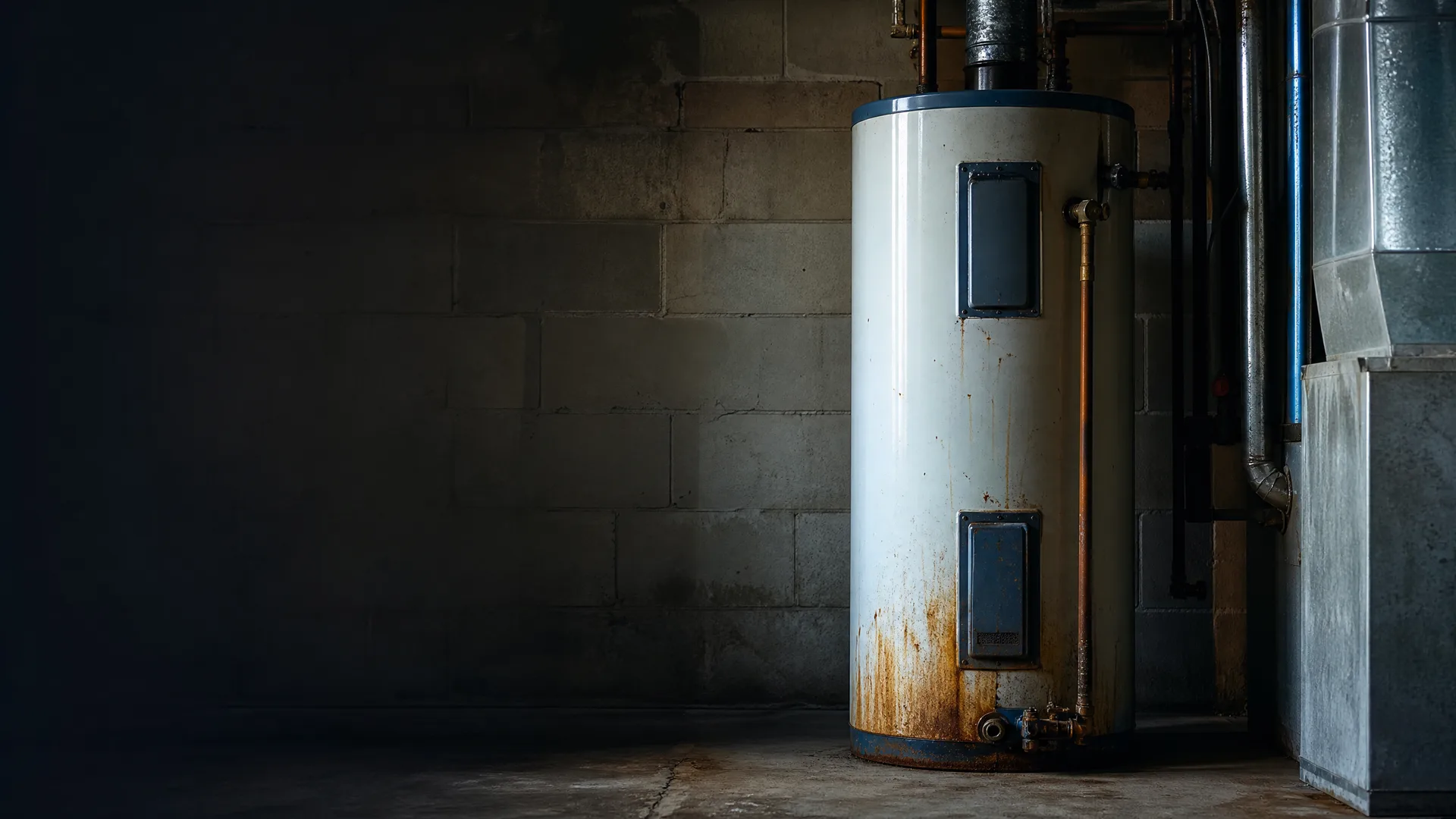
A rusting white and blue water heater with copper and steel pipes stands against a concrete block wall in a dim basement with a bare concrete floor.

You go down to the utility room after supper to grab something from the chest freezer, and the floor by the water heater is damp again. Rust has worked its way down the side of the tank in two long streaks, following the seam toward the base. It's early evening, dark already outside, and the room holds the kind of damp chill that sets in once the woodstove upstairs is the only thing fighting it. You crouch down and press a finger to the rust. Wet. The tank has been making a ticking sound for a few weeks now when it runs, and you've been putting off looking at it. Standing there, you know this is the week you stop putting it off.
Why is your water heater costing more to run this year

You notice the recovery is slower than it used to be. Someone showers, and the next person waits longer for hot water, or runs out partway through. The pilot or burner cycles more than it seems like it should, and if yours runs on electricity, that shows up on the bill given what power costs in Maine. A tank losing heat through its jacket has to run longer to hold temperature, and that's time and fuel spent warming water nobody's using yet. If the unit is old enough that you're not sure of its age, that alone is worth checking, since a tank near the end of its life tends to lose efficiency before it fails outright.

  1. Cold water enters the tank or tankless unit through the dip tube.

  2. A gas burner or electric element heats the water on demand or in storage.

  3. A tank stores hot water until a faucet calls for it.

  4. A tankless unit fires its burner only when flow is detected.

Tank vs. Tankless in a Maine Home

Tank

  • A tank heater fired by oil or gas can use the flue or fuel line already running to the house, so installation doesn't mean adding new venting.
  • Recovery depends on burner size and tank capacity, not on how much power the panel can spare, which matters where electric rates run high.
  • A larger household drawing several showers back to back is pulling from a reserve that's already hot, rather than asking a burner to keep pace in real time.
  • An oil-fired tank keeps producing hot water the same way whether it's July or a January cold snap, since it isn't drawing more power to work harder.
  • Parts for a tank unit, the thermocouple, the anode rod, the burner assembly, are familiar to most local contractors who service oil and gas equipment year round.
  • A tank holds a finite supply, so recovery time after a long run of showers or a full load of laundry depends on burner output and tank size together.

Tankless

  • An electric tankless unit draws a large amount of power the instant it fires, and Maine's electric rates make that draw more expensive per gallon than a tank's.
  • A gas-fired tankless unit needs its own venting sized for the unit, which can mean new work if the house wasn't piped for one already.
  • There's no standing reserve, so hot water doesn't run out, but output is capped by the unit's flow rate rather than by what's stored.
  • Two showers and a dishwasher running together can exceed a single unit's rated flow, dropping water temperature until demand eases.
  • A tankless unit takes up far less space than a tank, which matters in a utility room already crowded with oil equipment or a furnace.
  • Because it only fires when flow is detected, a tankless unit isn't holding a tank of water hot around the clock between uses.
A man with grey hair and stubble in a dark sweater sits on a grey sofa indoors, looking off to the side, with a potted plant and a sunlit window behind him.
A man with gray hair, a beard and glasses, wearing a dark green sweater, sits on a gray sofa in a sunlit living room with a potted plant, table lamp and wooden sideboard behind him.
A middle-aged man with graying hair and a short beard sits on a blue sofa in a living room, looking toward a window, with a bookshelf, lamp and framed picture in the background.
A man with graying curly hair and a dark green sweater sits on a gray sofa in a sunlit living room, looking off to the side, with a framed picture, shelving, an armchair and a window with sheer curtains behind him.

Skip the search

Deciding between tank and tankless is one thing. Finding someone to install either one is another. You could spend an evening calling around, telling each company the same story about your oil-fired tank or your panel capacity, then wait on quotes that are hard to compare because no two contractors priced the same job the same way. This page sends your request to one licensed contractor working in Maine, someone who installs these units every year and knows which failures are common in homes heated with oil and which venting or electrical questions come up in houses like yours. You won't get a handful of calls to sort through, just the one. That leaves you free to think about the part that actually matters: whether your house is set up for a flue and fuel line already in place, or whether it makes more sense to change that. Once you've got a sense of which way you're leaning, the button above is where you start.

A tankless unit that runs on electricity has to pull enough amperage at the moment someone turns on a faucet to heat water straight through, with no tank to draw from first.

That draw hits your panel hardest on the coldest days, when the water coming in is coldest too, which is exactly when Maine electricity costs the most to use.

A woman with shoulder-length brown hair wearing a beige knit cardigan sits in a gray upholstered armchair near a window, looking off to the side with a slight smile, with bookshelves blurred in the background.
A woman with her hair in a bun holds a sleeping young child against her chest, both wrapped in a textured beige knit blanket on a sofa in a dimly lit room with a lamp, framed picture, and bookshelf behind them.

55.3% of homes statewide heat with fuel oil

Most houses around you run an oil burner for heat, and that same oil line or flue is what a tank water heater can tie into. An electric tankless unit has nothing to do with that setup. It draws straight from your panel instead, on a grid where every kilowatt already costs you.

ACS 2020-2024 5-year B25040

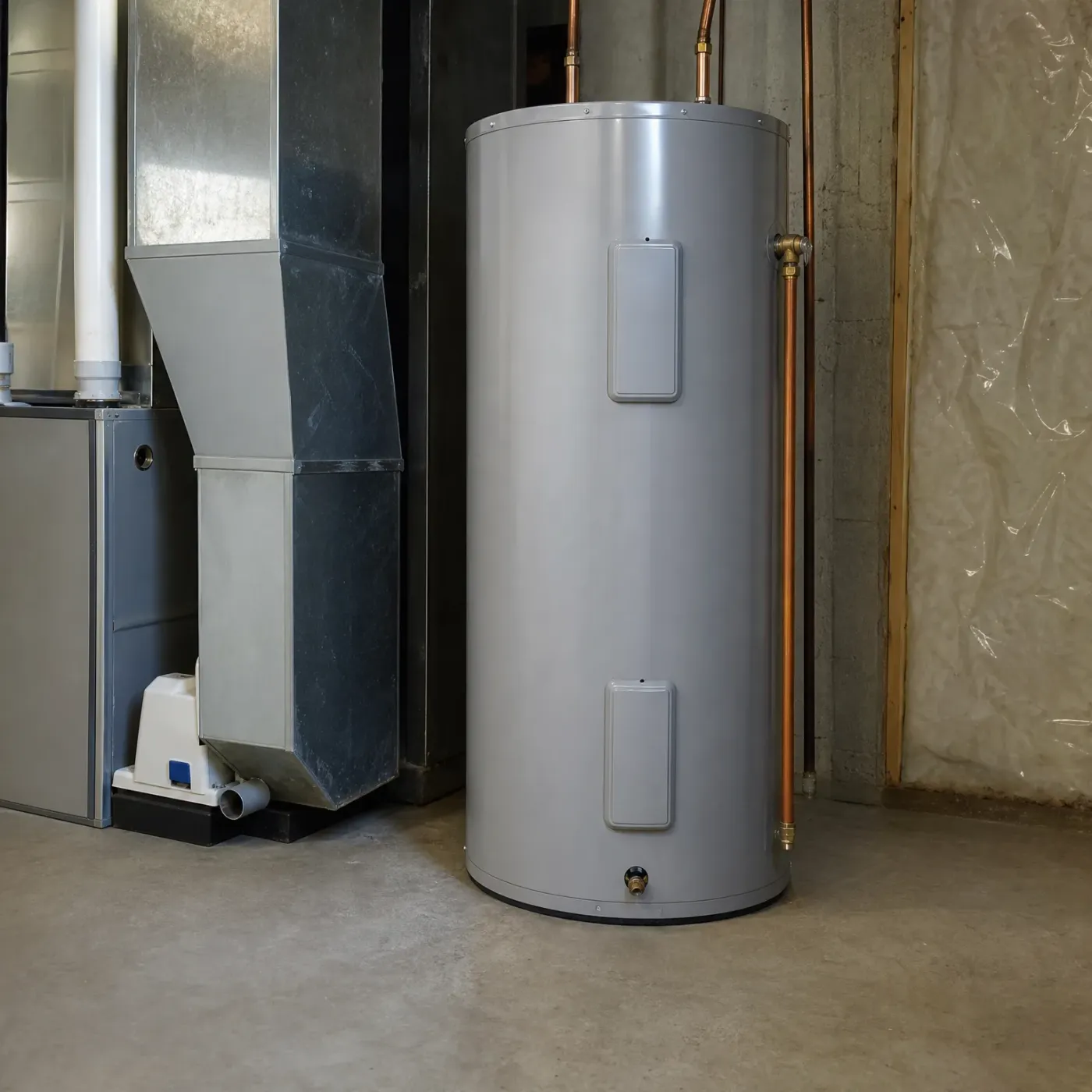
A gray cylindrical electric water heater with two access panels stands on a concrete floor in a basement, with copper pipes above and behind it, sheet-metal ductwork and a furnace to the left, and a plastic-covered insulated wall to the right.

Working as it should

This is a tank heater doing its job: copper lines, brass fittings, steady supply to the house. Sitting next to the furnace like this, it can often share the same fuel line or flue already running to the oil burner, so there's nothing new to vent.

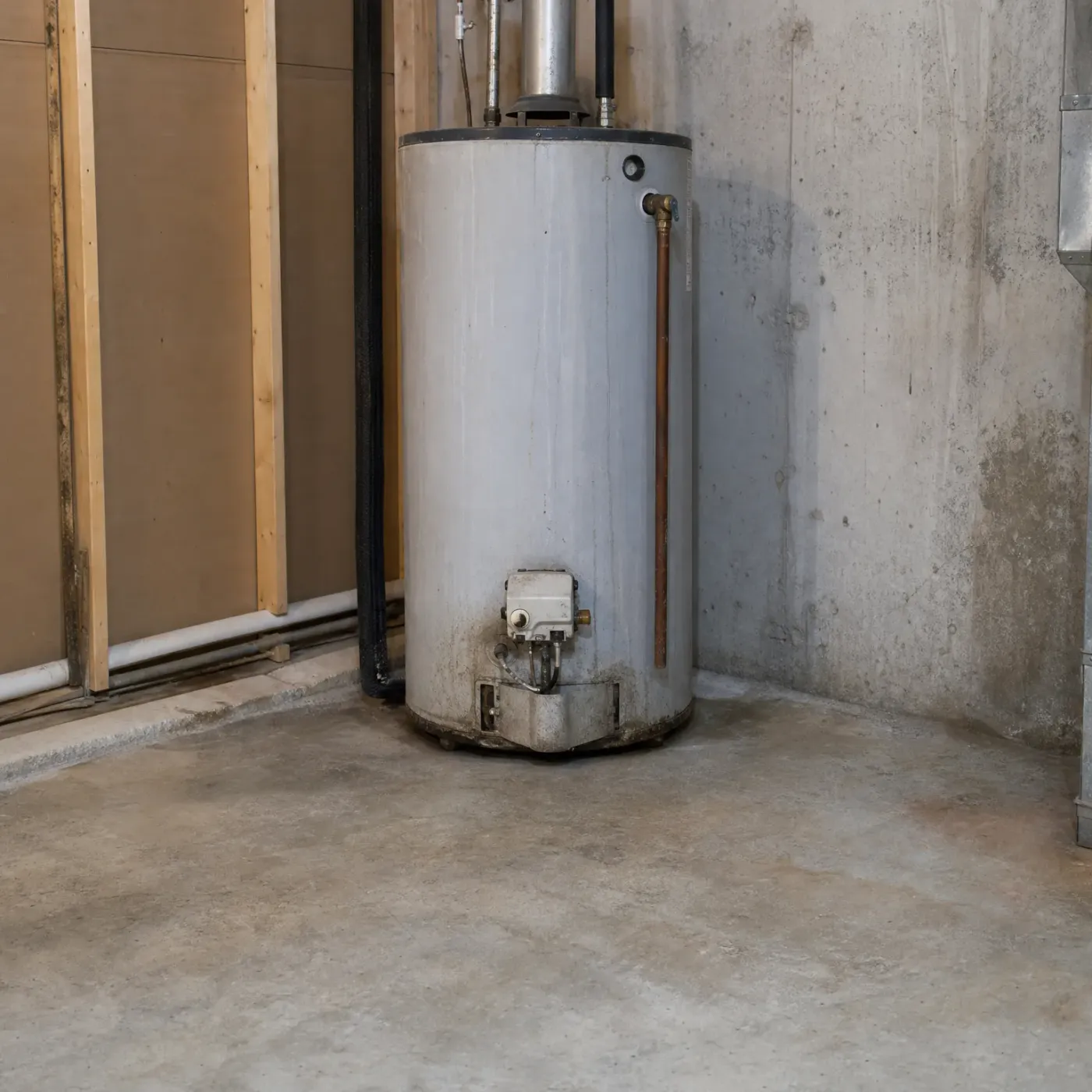
An older gas water heater with a copper pipe and flue stands on a concrete floor in a basement corner between a bare concrete wall and an unfinished wood-framed wall.

Past its working life

Rust has worked down the tank and pooled grime around the burner. A unit this far gone is failing quietly, losing recovery before it fails outright. Whether the next one is another tank or a tankless unit, the flue and the fuel line already at this corner shape which one installs easier.

A closed silver laptop and a ceramic mug of dark coffee sit on a wooden table in front of two chair backs, with a kitchen counter, tiled backsplash, wooden cutting boards, a vase of greenery and a potted plant by a window behind.

What this comes down to

For most homes in Maine, a tank water heater is the right call, mainly because it can use the oil line or flue already feeding the furnace. A tankless unit still has its place if your home is already set up for it or you're building new, but swapping in electric tankless means asking your panel to do something it may not be sized for, on a grid where power already costs more than most places.

Either way, this isn't a job to hand to whoever answers the phone first. You'd normally spend time finding someone who actually works on both types, explaining your setup more than once, and sorting through quotes that don't compare cleanly. Submitting this request skips that part. It goes to one licensed contractor local to Maine, someone who sees oil-fired tanks and electric panels like yours all the time and knows which one makes sense in your house.

Interior corner of a room with a window and sheer curtain at left, a gray upholstered sofa with a cushion at right, and a round wooden table holding stacked books and a round vase with an olive branch.
A single-story stucco house at dusk with a lit paver walkway lined by low path lights, desert plants and boulders in front, and distant mountains under an orange and blue sky.

Water Heater Installation

Explain it one time

Step 1 of 3: Equipment
  • A beige upholstered armchair with an olive cushion sits in a sunlit corner beside a wooden side table holding a ceramic vase with leafy branches, under a framed abstract artwork, on a woven rug over a wood floor.
    • A local installer who puts in water heaters gets your project.
    • Get in touch with a local installer about a new water heater.
  • A gray outdoor condenser unit on a concrete pad surrounded by dark gravel, beside a dark wood-sided wall with an electrical disconnect box and a stone veneer wall with a small evergreen shrub.
    • Send the form and stop researching installers for the new water heater.
    • One request ends the search for a water heater installer.
  • A beige upholstered oversized armchair with a matching cushion and a knit throw draped over one arm, beside a round wooden side table holding a vase of greenery near a curtained window, with a framed landscape print on the wall and a woven rug on a wood floor.
    • Skip collecting and comparing quotes for the new water heater.
    • Fill out one short form instead of calling around.
  • Sunlit living room corner with a beige upholstered sofa, cushion and knitted throw, a round wooden side table holding a white ceramic vase of leafy branches and a small wooden bowl, a framed landscape painting on the wall, and a window at right.
    • Your request goes to one pro, not a list of companies.
    • The pro who reaches out is licensed in Maine.