Maine Hot Water

Why your water heater is leaking in Maine

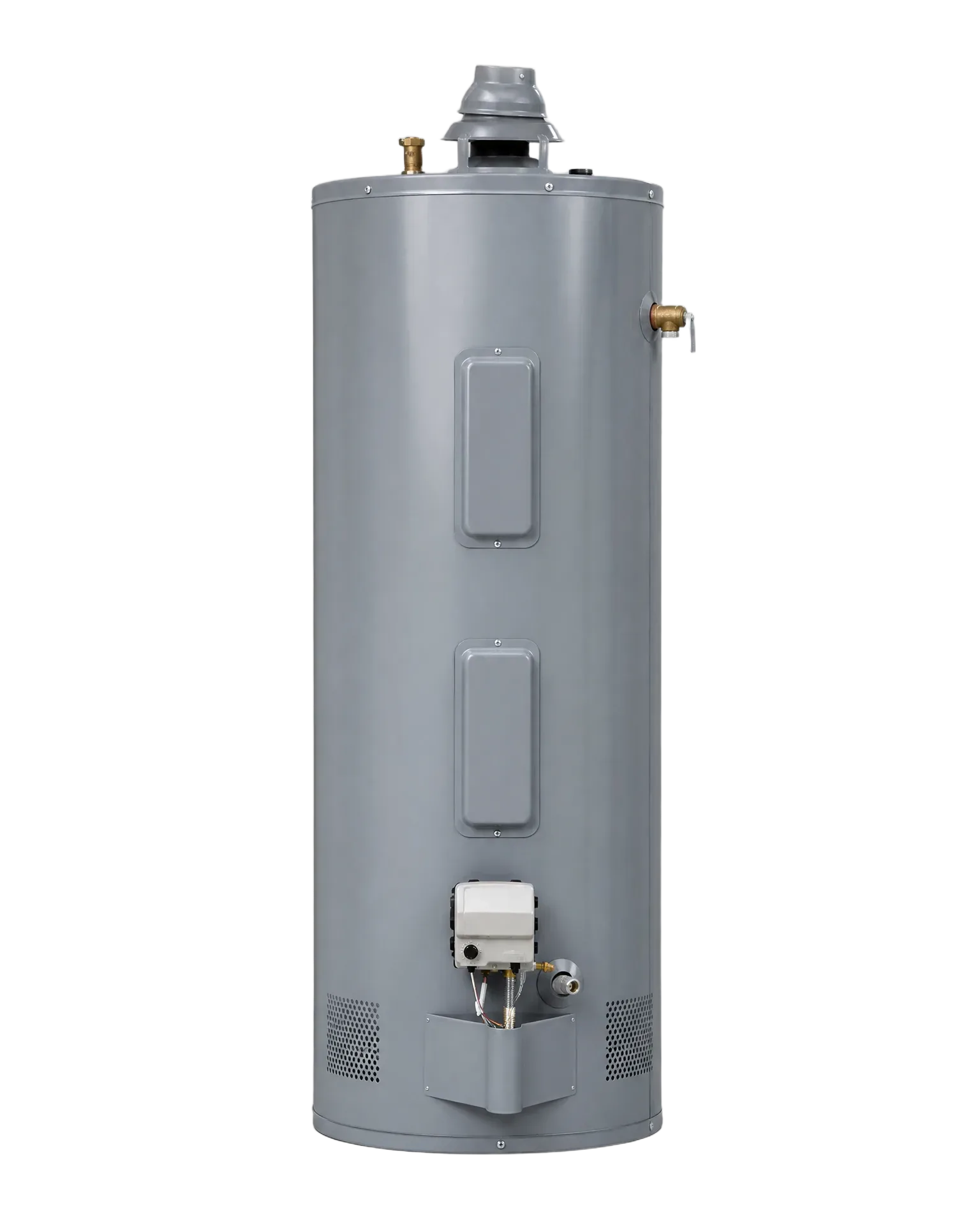
A gray cylindrical gas water heater with a top flue hood, brass fittings, two access panels, a control valve and burner cover, photographed against a plain gray background.
Match me with a pro

Why is my water heater leaking?

A puddle under the tank or water dripping from a fitting usually means something specific is wrong, not a mystery problem. Before you find yourself bailing water or shutting off the supply line, it helps to know what's actually going on inside the tank and whether it's something a repair can fix or a sign the unit is done.

Most leaks come from a failed valve, a loose fitting, or a tank that's rusted through

A leak at the bottom of the tank often means the drain valve or the temperature and pressure relief valve has failed and needs replacing. A leak from a fitting at the top, where the pipes connect, is usually just a loose connection that can be tightened or resealed. But if water is coming from the tank itself, the steel has rusted through from the inside, and that's not something a repair fixes. With Maine winters putting a lot of demand on your water heater to keep up with cold groundwater, and electricity here among the priciest in the country, a tank that's struggling or leaking is worth getting looked at rather than left to decide the timeline for you.

  1. Find where the water is actually coming from.

  2. Shut off the cold water supply to the tank.

  3. Cut power or gas to the heater before anything else.

  4. Check the pressure relief valve and the drain valve first.

A woman with long wavy brown hair in a grey ribbed sweater sits on a couch indoors, looking toward a window, with a potted palm-like plant and fireplace behind her.
A woman with long brown hair wearing a green V-neck top and beige cardigan sits on a light sofa, looking off to the side, with a dining table, lamp and framed picture in the background.
A woman with long dark hair in a cream knit sweater sits on a beige sofa indoors, looking toward a bright window with a houseplant and framed picture in the background.
A woman with long dark hair in a green knit sweater sits on a couch indoors, smiling and looking toward a window with a blurred room behind her.

Why the tank itself fails

A water heater tank is lined with glass to keep the steel underneath from rusting. That lining wears thin over years of heating and cooling, and once it fails, the steel underneath starts to corrode. Rust eats through from the inside out, so you won't see it coming until a seam gives way or a pinhole opens in the tank wall. At that point the leak isn't a loose fitting or a bad gasket. It's the tank itself, and a tank that's rusted through gets replaced, not patched. A heater that sits in a basement or a garage here often shows this kind of failure first at the bottom seam, where water collects.

What the anode rod does

Every tank has a sacrificial anode rod running through it, usually magnesium or aluminum. Its job is to corrode first, so the steel tank doesn't have to. As long as the rod still has material left on it, it keeps doing that job. Once it's used up, the tank itself becomes the next thing corrosion attacks. A rod checked and swapped out before it's fully spent can add years to a tank's life. A homeowner who's never had the rod checked, and whose water heater came with the house, is often looking at a rod that's long past doing any good.

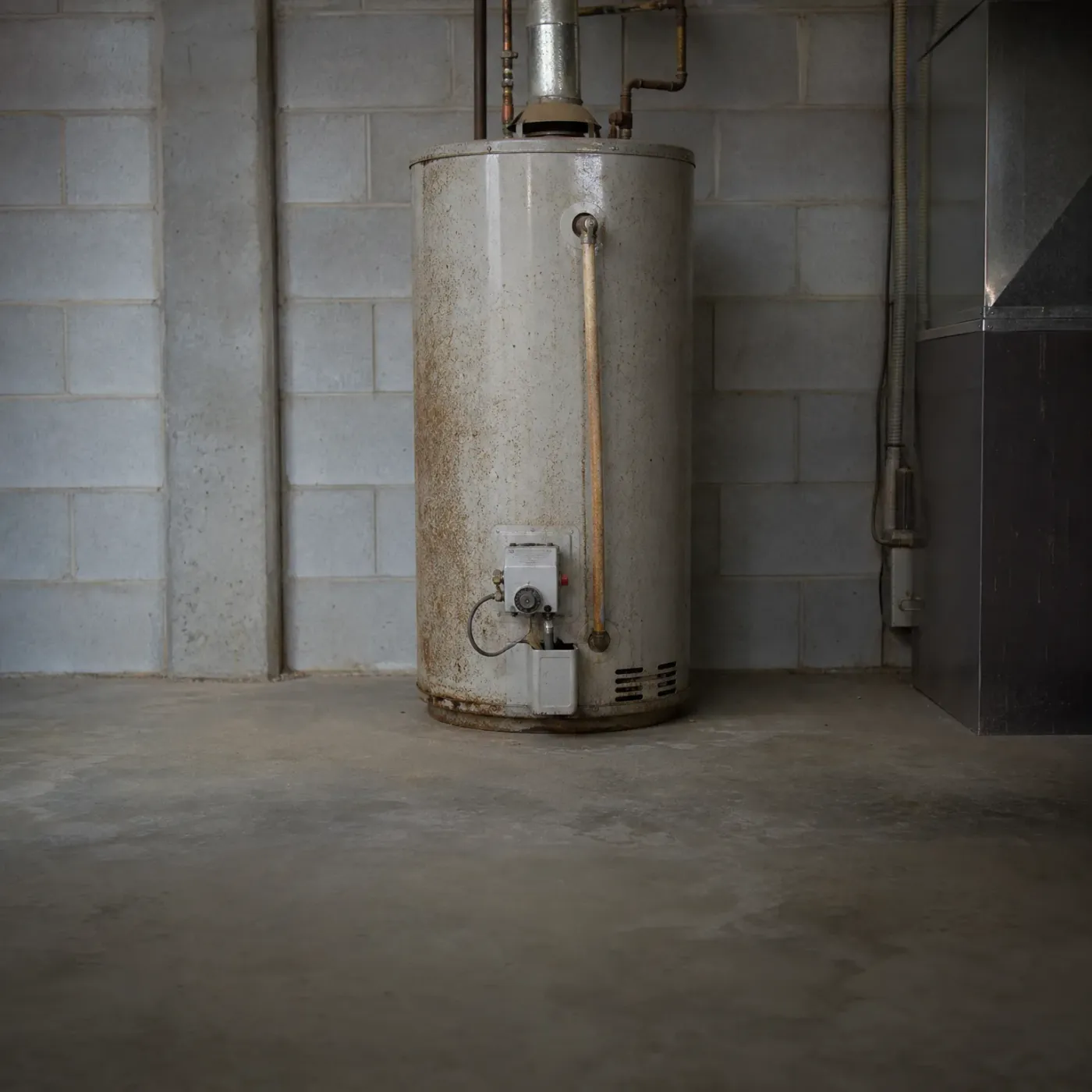
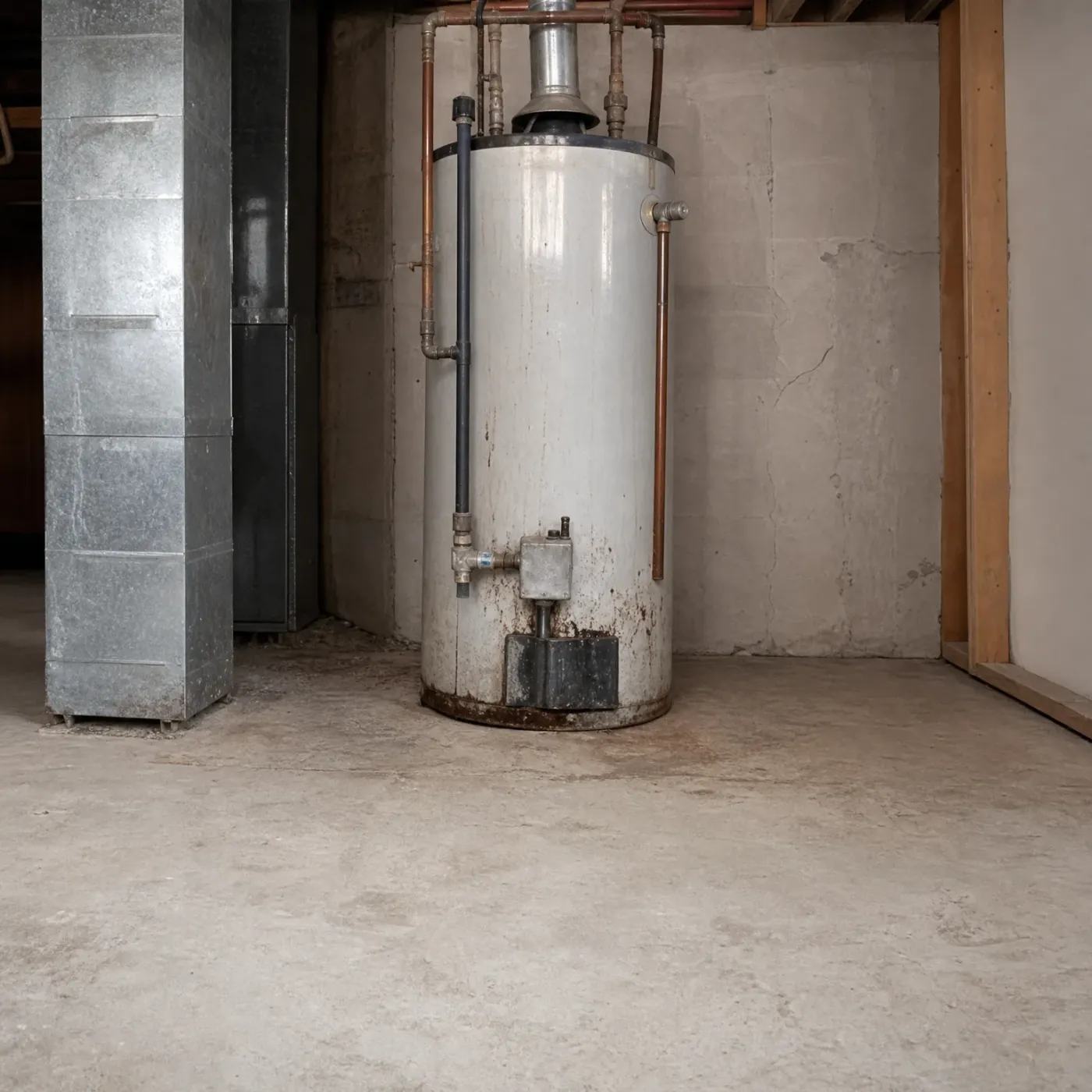
A rusted gas water heater with a flue pipe stands against a concrete block wall on a bare concrete floor, next to a dark metal duct or furnace cabinet at right.
Before you get your water heater repair
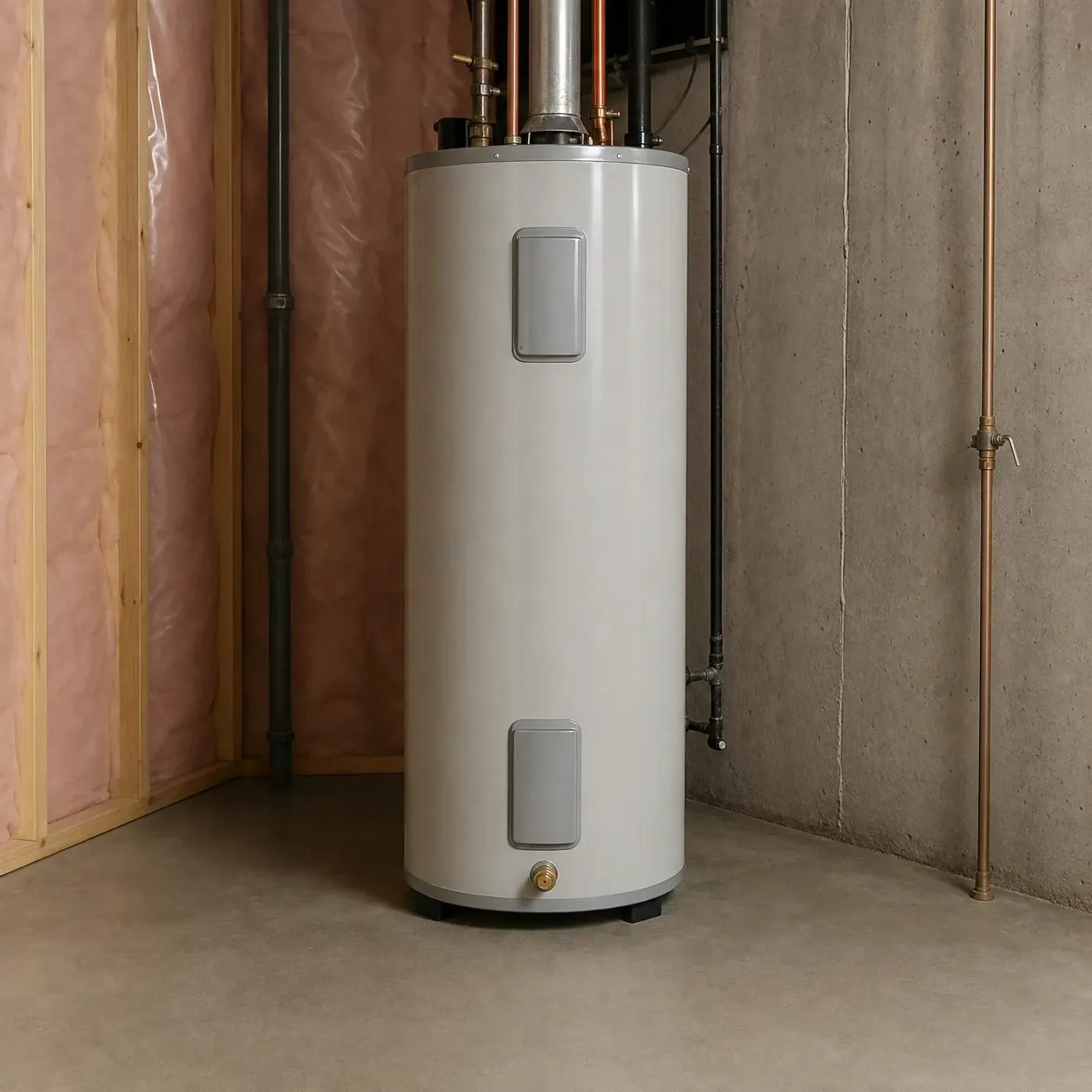
A white cylindrical water heater with two access panels and a brass drain valve stands on a concrete floor in a basement corner, beside a pink-insulated stud wall and a concrete wall with copper and black pipes.
After you get your water heater repair
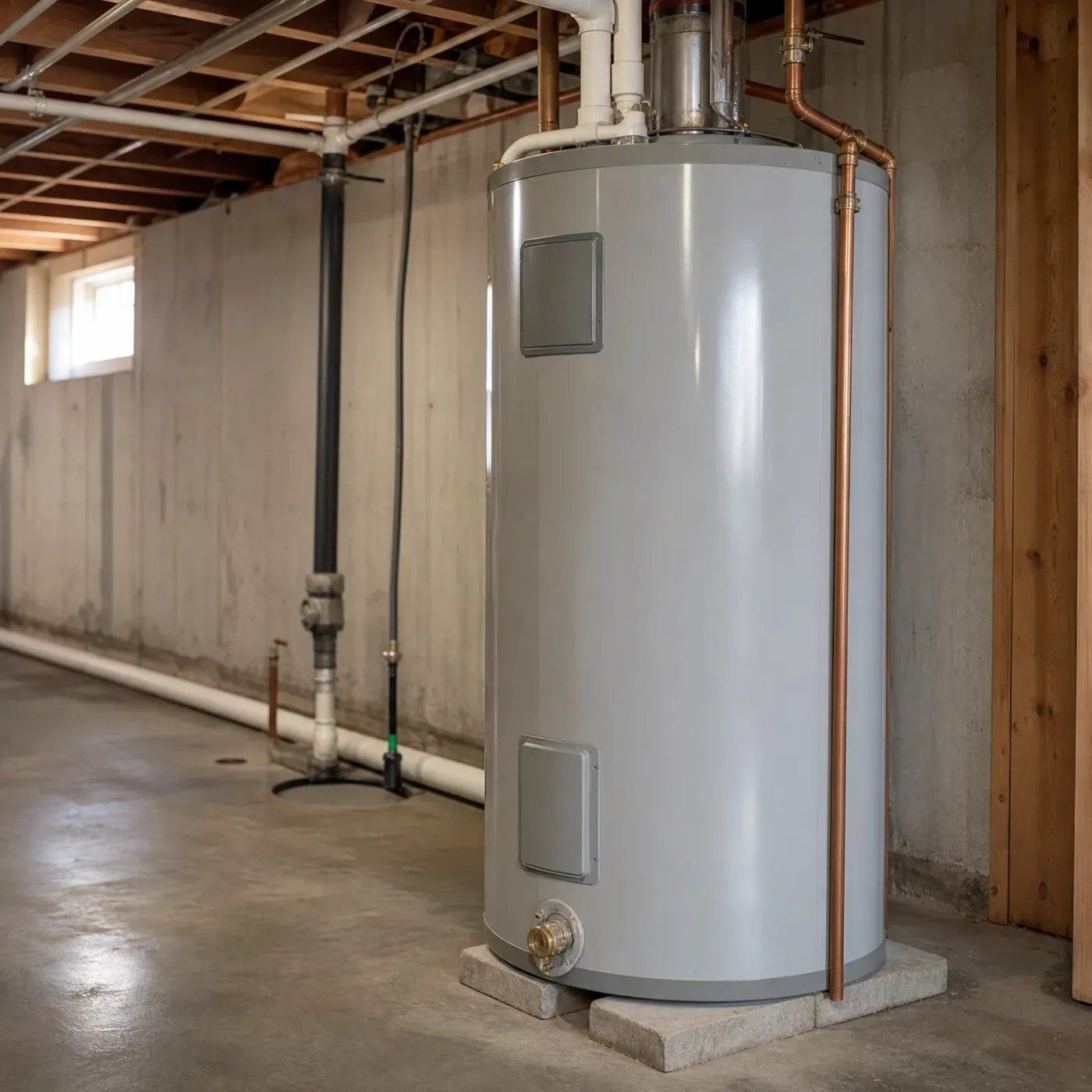
A large white cylindrical water heater on concrete blocks in a basement with poured concrete walls, exposed joists, copper and PVC piping, and a small window.

Get your water heater to the right pro

Send the request today and stop worrying about who to call.

Tell a local repair pro what your water heater is doing.

Find my pro

No fee to send it, and nothing to sign.

What's that puddle by the water heater actually telling you

Check the floor around the base first. A damp ring or standing water means the tank or a fitting is already letting go, and it won't seal itself back up. Look at the color too. Clear water points to a fitting or valve. Rusty or reddish water means the tank itself is corroding from the inside, and that only gets worse. If you smell gas near the unit along with the leak, that's a separate problem and a more urgent one. Left alone, a leaking tank can soak the subfloor underneath it or run toward anything stored nearby, and in a Maine basement that often means the oil furnace or boiler sitting a few feet away.

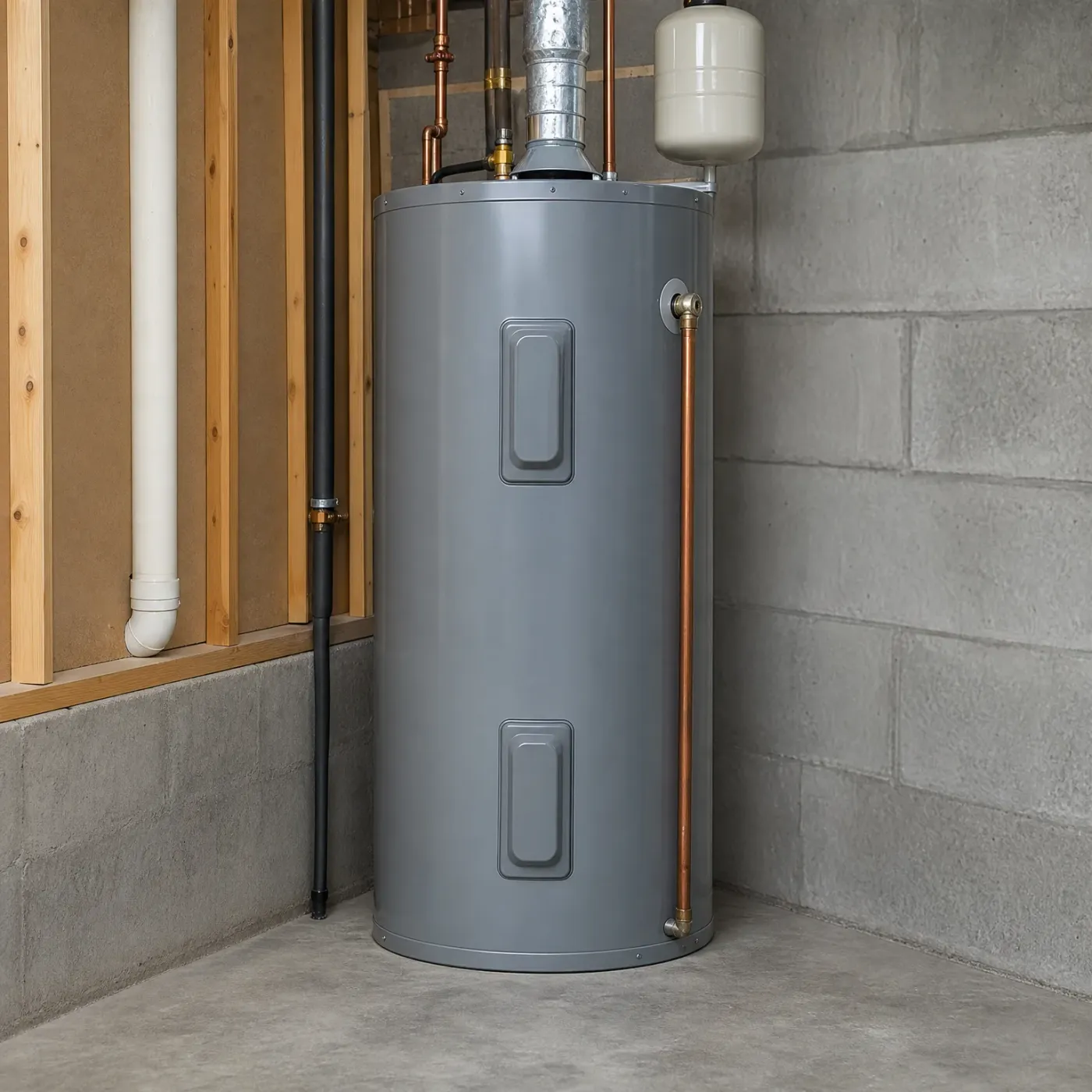
A gray cylindrical water heater with copper piping and an expansion tank stands in a basement corner beside a concrete block wall and exposed wood framing.

A tank that's doing its job

No rust on the fittings, no damp spots on the floor, the expansion tank holding steady above it. Copper lines and the drain pipe are dry where they meet the tank. This is what a water heater looks like before anything's gone wrong.

An old rusting cylindrical gas water heater with copper and steel pipes and a flue stands against a concrete basement wall beside metal ductwork on a bare concrete floor.

A tank past the point of fixing

Rust has spread across the jacket and down toward the base, with mineral deposits built up around the fittings. When corrosion looks like this on the outside, the steel inside has been failing a lot longer. A tank in this shape needs replacing, not patching.

A gray-haired woman in a cream knit sweater stands in a dimly lit kitchen at night, looking to her right, with a round loaf of bread in the foreground and a dark window and potted plant behind her.
A woman and a sleeping child wrapped together in a cream knitted blanket on a couch, with a potted plant, framed photo and lit lamp in the background.

What's actually going on inside the tank

  • The anode rod inside the tank corrodes on purpose so the steel tank doesn't have to.
  • Once the anode rod is used up, the tank itself starts rusting from the inside out.
  • A leaking pressure relief valve is often just responding to pressure that's too high, not failing on its own.
  • Threaded fittings loosen slightly as the tank heats and cools hundreds of times a year.
  • Sediment settling at the bottom of the tank traps heat against the steel and speeds up corrosion.
  • A leak at the drain valve usually means the valve itself needs replacing, not the tank.

A water heater is built to sacrifice one part so the rest lasts. The anode rod, a length of metal that hangs inside the tank, is designed to corrode first. It draws the rust to itself instead of the steel. That works for years, but the rod wears down, and once it's gone, the tank has nothing left protecting it. Rust starts eating the steel from the inside, and that's a slow process you won't see until water starts finding its way out through a pinhole or a seam.

Not every leak means the tank is done. The pressure relief valve on top is built to open and let water out when pressure inside climbs too high. If you're seeing water there, the valve may be doing exactly what it's supposed to do, which points to a pressure problem rather than a bad valve. Fittings are a different story. The tank heats and cools all day, expanding and contracting, and threaded connections can work themselves loose over hundreds of cycles. Sediment is another quiet cause. It settles at the bottom, sits against the steel, and holds heat there longer than it should, which speeds up corrosion in that spot. And a leak right at the drain valve is usually the valve itself, not the tank behind it, which is a far simpler fix.

55.3% of homes statewide heat with fuel oil

More than half the homes in Maine run on oil heat, which means an oil-fired boiler often shares space with the water heater and sometimes shares a flue or even feeds it hot water through a coil. If that tank starts leaking, check the connections between the two before you assume the water heater alone is at fault.

ACS 2020-2024 5-year B25040

A leak doesn't fix itself, and most of the time it doesn't stay small. Whether it's a loose fitting, a worn-out anode rod, or a tank that's rusted through, the fix depends on what's actually happening at your tank, which is why a look in person beats another guess from across the room. If your water heater shares space with an oil boiler, that gets checked too, since the connections between them matter as much as the tank itself. Once you send the form, you're done hunting for who to call. A contractor who covers your part of Maine gets your information and reaches out to you directly. You don't have to track down numbers or sit on hold while water keeps finding its way to your floor. That part becomes someone else's job the moment you ask for it.

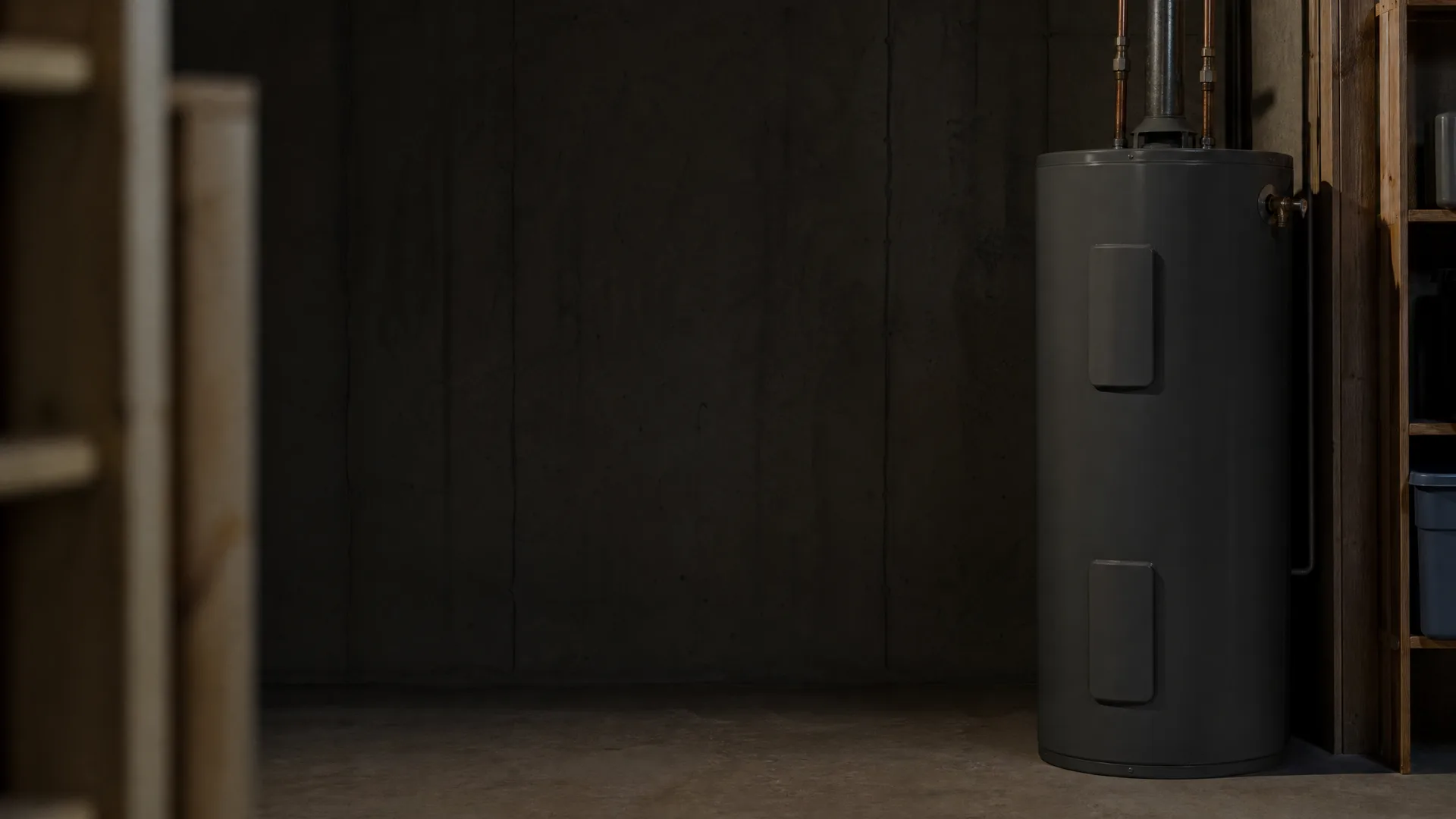
A dark gray cylindrical water heater with copper pipes at its top stands against a concrete basement wall, with wooden shelving and framing in the foreground at both edges.

The right pro for this job

Send the request and finding a pro stops being your problem.

Step 1 of 3: Equipment