Why your water heater makes popping noises in Maine

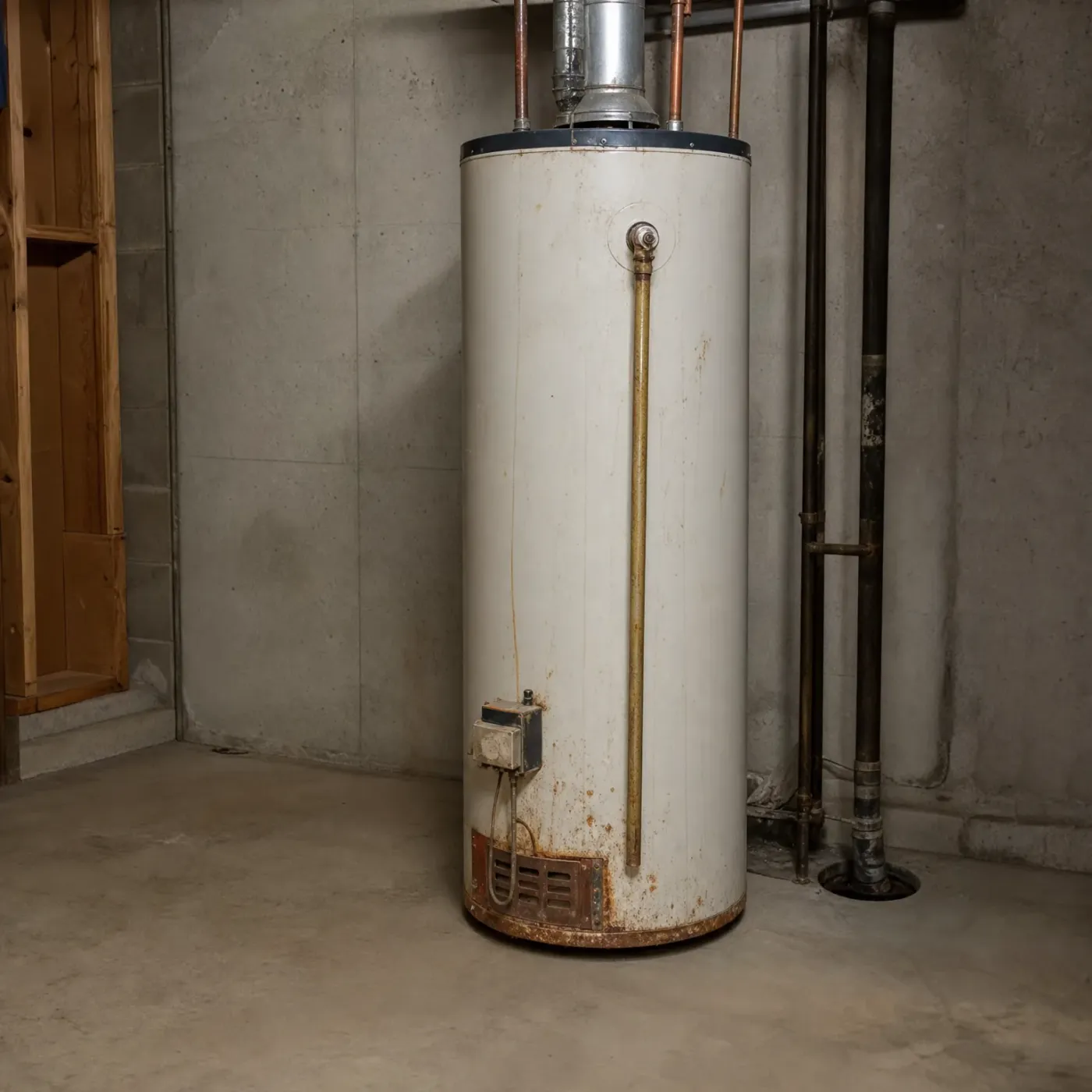
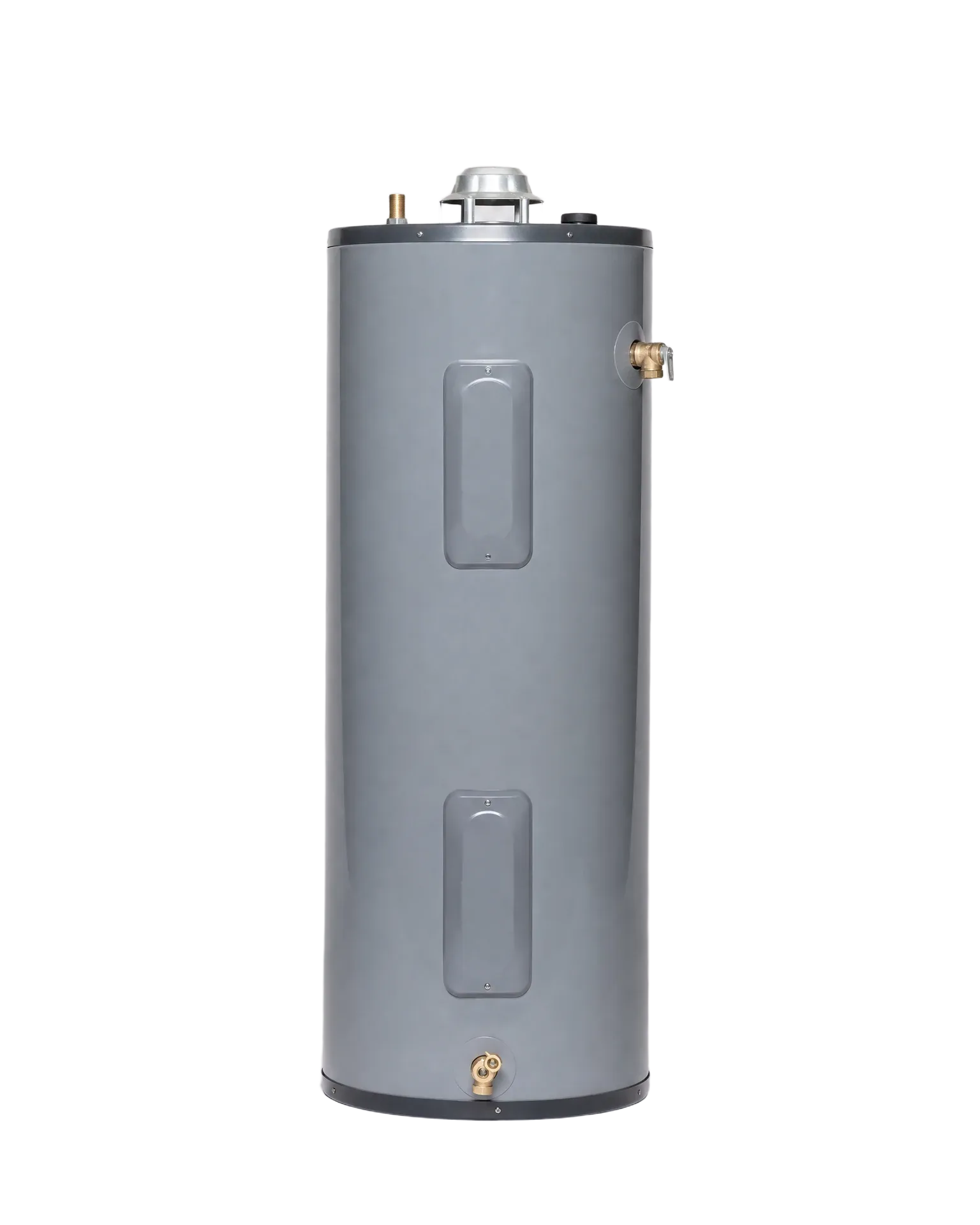
A gray cylindrical water heater with two access panels, a brass side valve, a bottom drain valve, and a metal vent cap on top, photographed against a plain light background.
Request a pro

The popping comes from sediment. Maine water tends to be hard, and over time minerals settle out of it and build up on the bottom of the tank, right where the burner or heating element sits. Water gets trapped under that layer, and when it heats up, it turns to steam and pushes up through the sediment, and that's the popping or rumbling you hear. It gets louder as more sediment builds, because there's more water getting trapped and more steam working its way out. A tank that pops is working harder to heat the same amount of water, since the sediment sits between the heat source and the water above it. Left alone, that extra strain wears on the tank, and in gas models it can also mean the burner is scorching the bottom of the tank itself rather than the water.
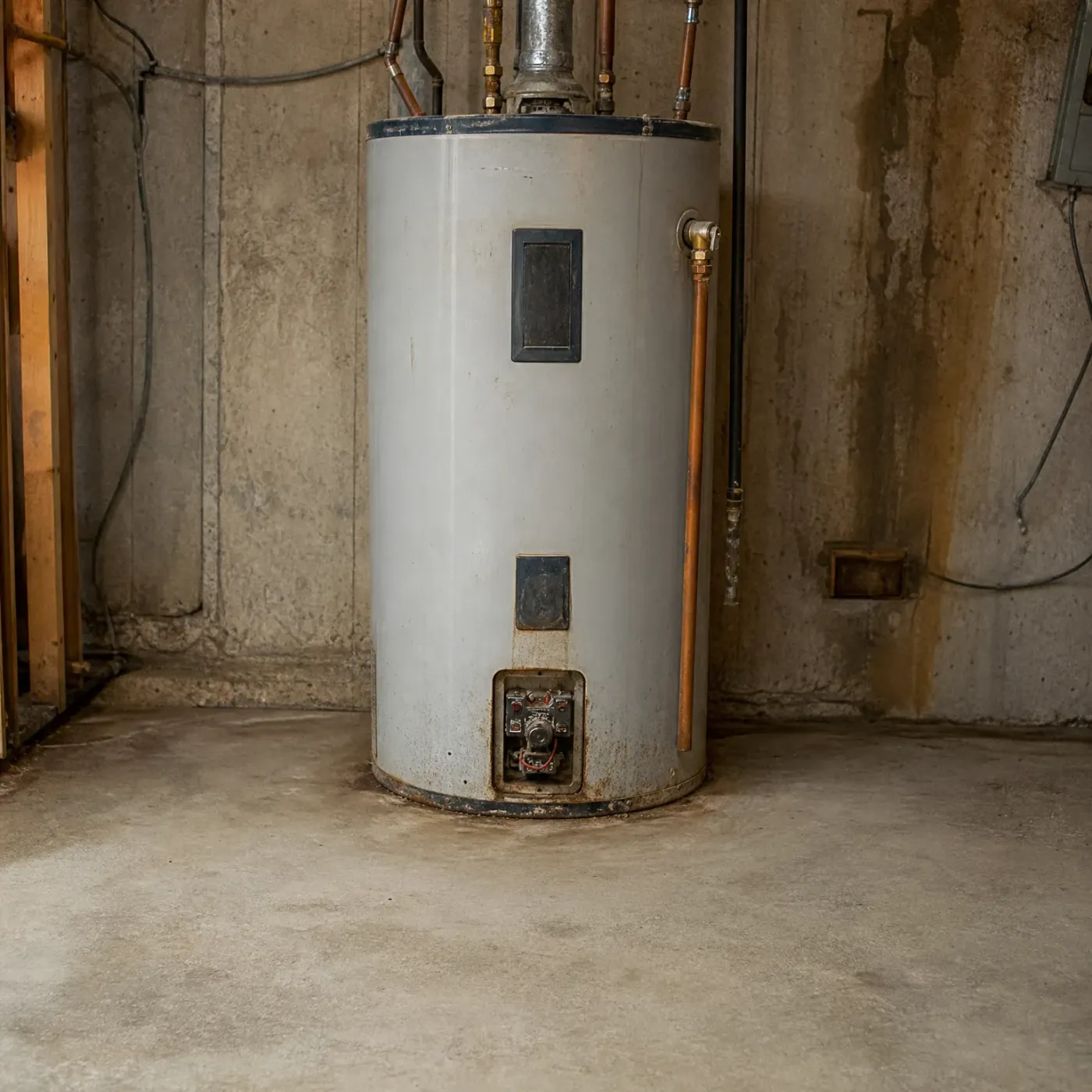
A white cylindrical water heater with copper piping and a gas control valve stands against a stained concrete basement wall on a bare concrete floor.
Before you get your water heater repair
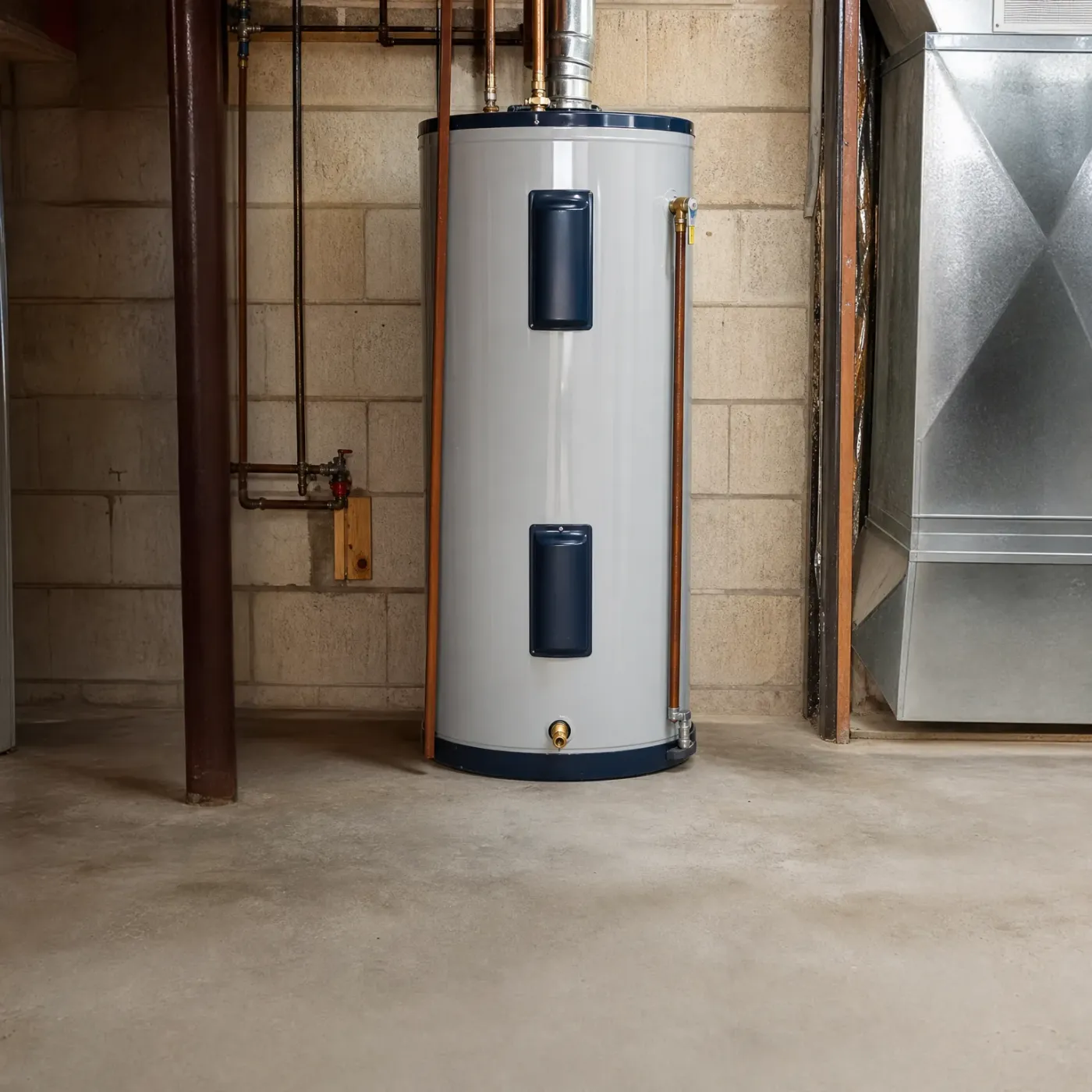
A white cylindrical water heater with two dark access panels stands on a concrete basement floor against a concrete block wall, with copper pipes, a flue duct above, and sheet metal ductwork at right.
After you get your water heater repair

Sediment cuts efficiency fast

The buildup sits between the burner and the water, so the tank works harder to heat the same amount. With Maine's power costs, that shows up on your bill before much else does.

I'm done searching

The noise usually comes first

Popping tends to start well before a tank fails outright. Getting it looked at now is the difference between a repair and a full replacement later.

I'm done searching

Why does my water heater pop louder some days than others?

Some nights it's a few taps. Other nights it sounds like gravel shifting around in the tank. You haven't changed how you use hot water, so it's fair to wonder what makes the noise worse on some days and not others. The answer has to do with how much is in there and how hard the burner or element is working at that moment.

It depends on how much sediment has built up and how hot the water is running

A thin layer of sediment pops quietly, or not at all. A thick one traps more water underneath it, and that water has to get hotter before it breaks through, so the sound is sharper and louder. Heavy use days, a full house of showers, laundry, dishes, make the burner or element run longer and more often, which heats that trapped water faster. Maine's hard water keeps adding to the layer, so the noise tends to get worse over months, not better. It won't go away on its own, and once the sediment is thick enough, it can shorten the life of the tank or the element sitting in it.
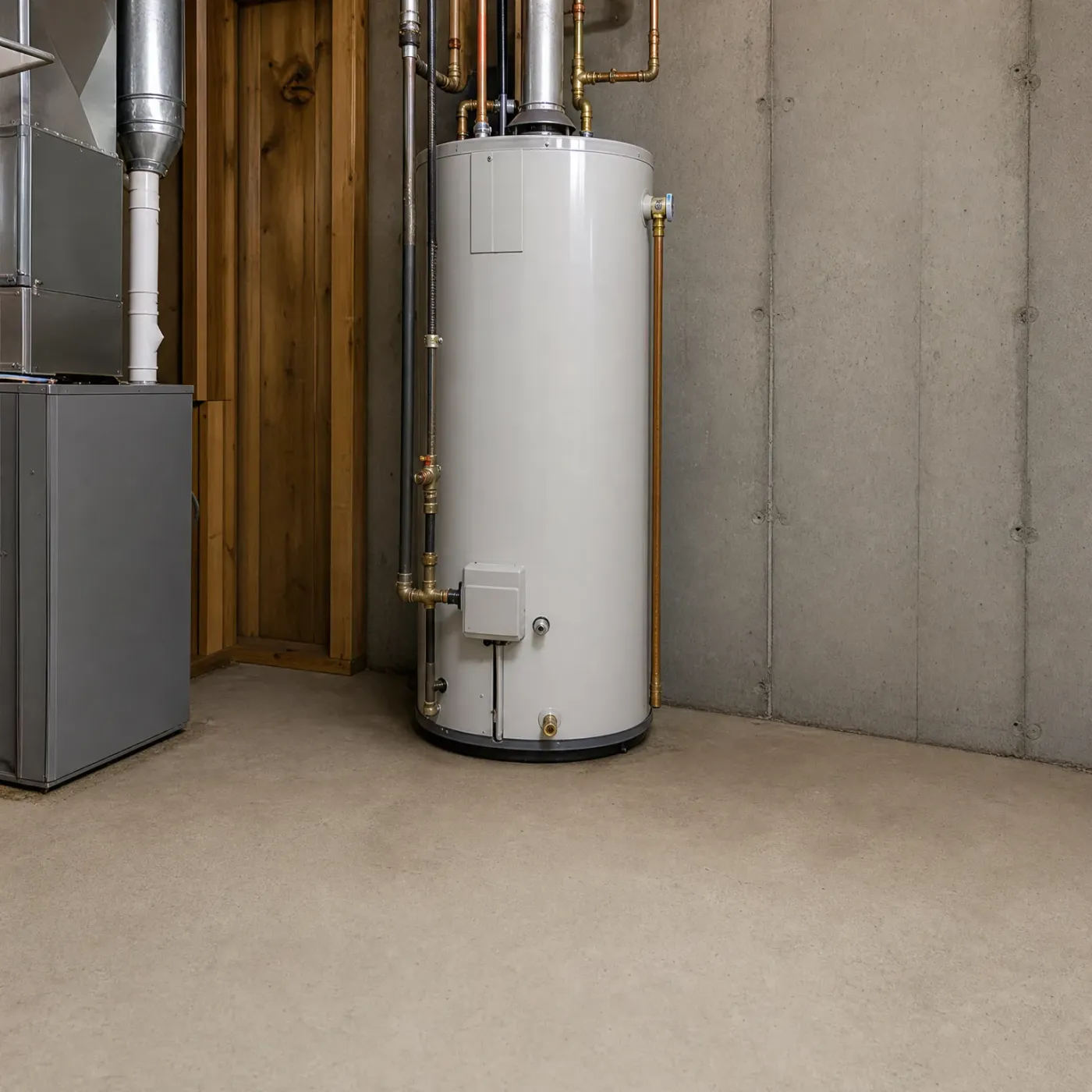
A white cylindrical gas water heater with copper and steel pipes stands against a concrete basement wall beside a gray furnace and wood-paneled wall.

Running quiet

A tank in good shape sits next to the furnace without much to say for itself. The burner heats clean water against clean steel, and the only sound most nights is the burner itself cycling on and off.
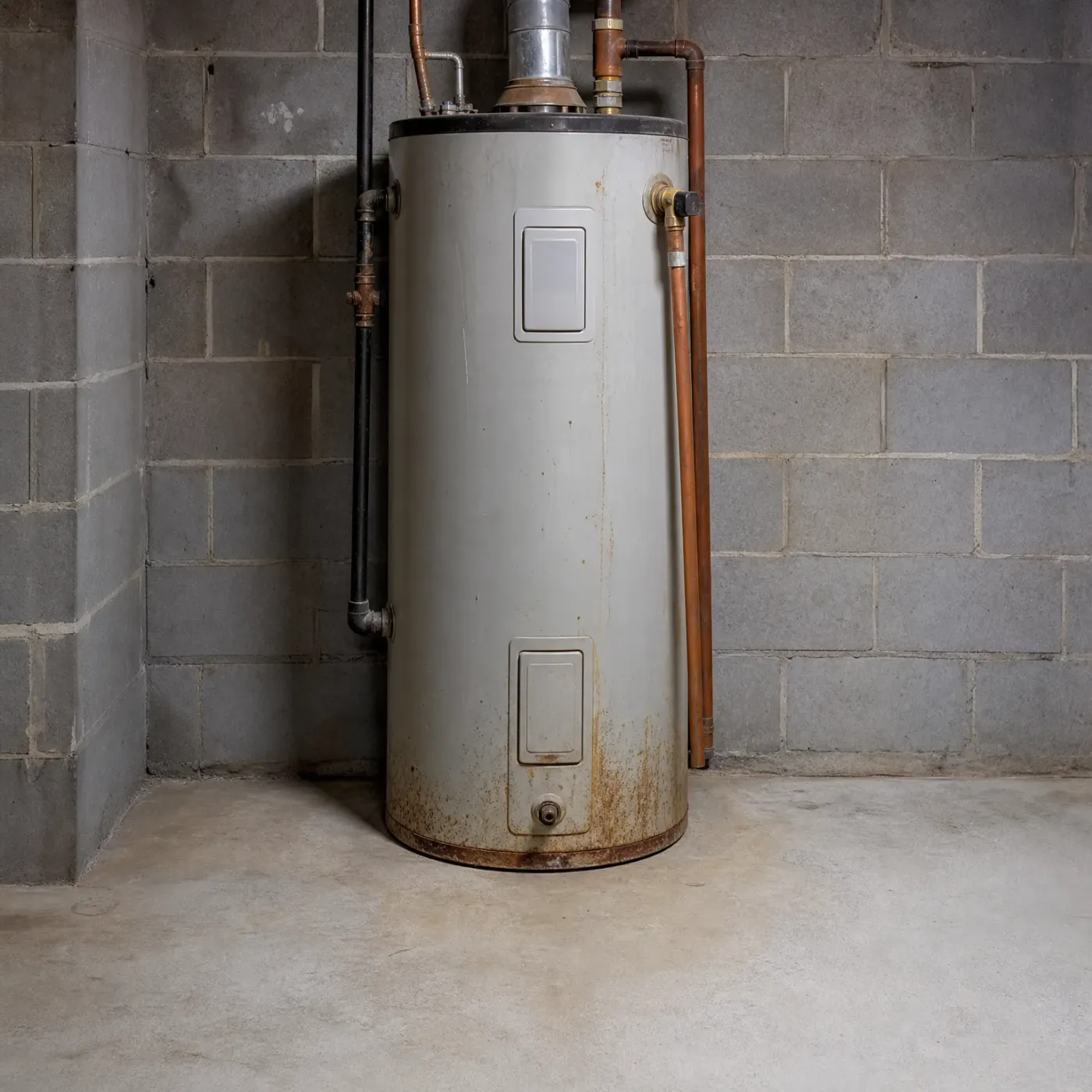
A rust-streaked cylindrical water heater with copper and black metal pipes stands in a concrete-block basement corner on a bare concrete floor.

Rust tells its own story

Once rust works down the seams and across the base like this, the popping has usually been going on for a while. Sediment held moisture against the steel long enough to eat through it, and a tank in this shape is closer to a leak than a repair.

A woman in a cream cardigan and jeans stands with one hand raised facing an open front door of a gray horizontal-siding house, with a black lantern wall light, a potted shrub with yellow flowers, and a stone-faced porch column.

What that noise means for your house

A tank that pops every night is spending more oil or power than it should to get the same hot shower. With Maine power rates what they are, that difference doesn't stay hidden for long. You'll see it on the bill before you see anything else change.

Left alone, the sediment layer keeps growing and the steel under it wears thinner in that one spot. That's how a popping tank turns into a leaking one, usually without much warning. If you'd rather have someone look at it than wait and see, send in your information and a contractor who handles water heaters in your area will reach out. You won't have to track one down yourself.


A living room corner with a light beige sofa holding a textured taupe cushion, a large ceramic vase of olive branches by a window, a framed neutral artwork on the wall, and a dark bowl with stacked books in the foreground.
A smiling man in a dark navy sweater sits on a light sofa in a living room, with a glass bowl of popcorn on a wooden coffee table and bookshelves behind him.
A smiling man in a dark green sweater sits on a tan leather sofa in a dimly lit living room, with a bowl of popcorn in the foreground and a kitchen area blurred behind him.
A smiling middle-aged man in a dark shirt sits on a gray sofa in a living room, with a bowl of popcorn on a side table and shelves, a window and kitchen area behind him.
A smiling bearded man in a dark gray t-shirt sits on a gray couch in a living room, with a large glass bowl of popcorn on a wooden table in the foreground.

Get the right pro for your water heater

Send the request today and let a water heater pro reach out to you.

Asking costs nothing, and the choice to hire stays yours.

Leave it alone and the popping keeps going, because the sediment that causes it doesn't break down or wash out on its own. The tank keeps working harder to heat through that layer, and the noise keeps marking every cycle.

Get it looked at and a contractor can tell you whether flushing the tank clears it or whether the sediment has already done damage worth knowing about. Either way you stop guessing at what the sound means.

55.3% of homes statewide heat with fuel oil

More than half the homes in Maine heat with oil, and yours is probably one of them, with hot water running off that same system or a separate electric tank next to it. Either way, sediment settles and pops the same, and oil heat won't quiet it down.

ACS 2020-2024 5-year B25040

  1. Sediment settles out of hard water and collects on the tank bottom

  2. A layer builds up right where the burner or element sits

  3. Water seeps down and gets trapped under that layer

  4. Trapped water heats up and turns to steam
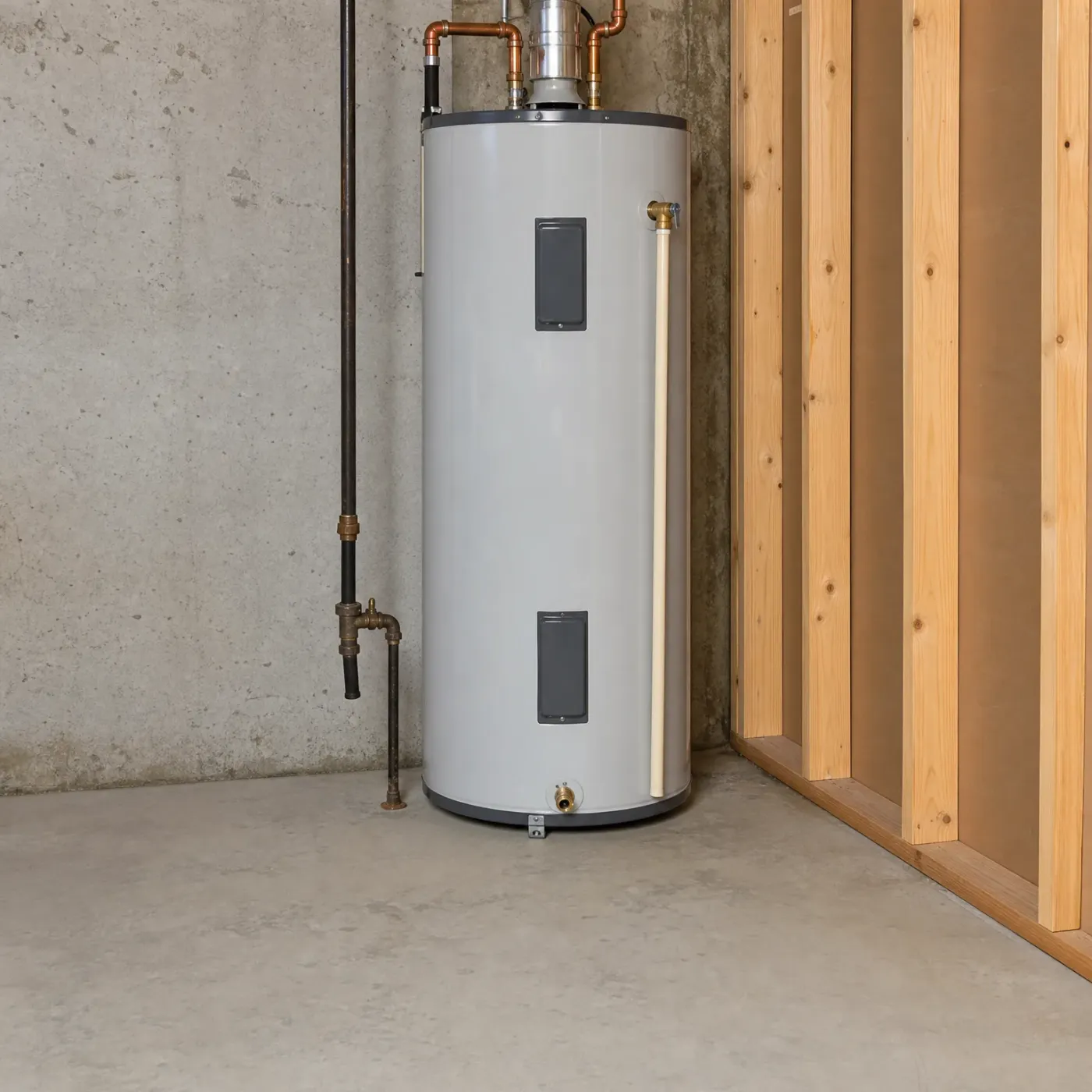
A light gray cylindrical water heater with two access panels stands on a concrete floor against a concrete wall, with copper and black pipes beside it and an unfinished wood stud wall to the right.
A quiet tank lets you see the fittings and valves clearly, with nothing hiding the steel at the bottom.
An older white gas water heater with rust staining and an exposed vertical pipe stands against a concrete block basement wall, with a metal flue above and black vertical pipes to the right.
Rust climbing the base like this often means sediment has been working on the tank for a long time.
A woman in a dark gray sweater reclines on a light sofa with eyes closed and a slight smile, under a textured gray blanket with an open book resting on her lap, with a lit table lamp and plant in the background.
A smiling bearded man in a navy crewneck sweater sits at a dinner table with a glass of red wine, plates and glasses in the foreground, in a dimly lit room with a lamp and framed picture behind him.

What the Popping Tells You

  • Popping starts with sediment and ends only when the tank is drained or the buildup is cleared out.
  • Left alone, the noise doesn't fade on its own, and the tank keeps spending more oil or power to push heat through the layer underneath.
  • A contractor can tell from the sound and the tank's condition whether it needs a flush or whether the damage has gone further.
  • Once you send the form, you're done hunting for someone to call, that part is off your plate.
  • The tank will either get quiet again or you'll know it's time to replace it, either way you'll know what you're dealing with.

The sound is sediment, settled on the bottom of the tank and getting in the way of the burner or element doing its job plainly. That much you know now. What you do with it is the only question left. A tank that pops tonight will pop tomorrow night too, and every night after, because the layer causing it doesn't wash away or break down by itself. It just sits there, making the tank burn more oil or draw more power to push heat through it, cycle after cycle, while your bill carries the difference.

A contractor who looks at it can tell you something you can't tell from the next room: whether this is a tank that flushes clean and goes quiet, or one where the sediment has already done damage to the steel underneath and a flush just buys a little time. That's the kind of thing you need eyes on the tank for, not guesswork.

Sending the form is the part you can do tonight, and it's also the last part that's on you. After that, the looking for someone to call, the sorting through who's available, that stops being your problem. You'll hear from someone, and from there you'll know whether you're fixing what you have or planning for what comes next. Either way, you'll know, instead of just listening to it pop.

At dusk, a dark board-and-batten house with a standing-seam metal roof and lit entry walkway of stone pavers, with two large outdoor heat pump units on a stone-walled pad at right and trees and hills in the background.

Water Heater Repair

A pro who works on water heaters

Step 1 of 3: Equipment
  • A dimly lit living room corner with a beige upholstered sofa holding a dark green cushion and a chunky knit throw, beside a wooden sideboard with a lit ceramic table lamp, a small potted plant, and a wooden bowl, with a framed artwork on the wall and a mug on a book in the foreground.
    • A round wooden coffee table holding a round stone vase of green foliage, a lit candle in a glass container, and a small dark bowl, with a beige sofa, cushions and knit throw behind and a window at left.
      • Once you send the form, finding a pro is off your list.
      • After you send the request, you're done searching.
    • Sunlit living room with a wooden coffee table holding a ceramic vase of leafy branches and a carved wooden tray with two stacked books, in front of a beige sofa with tan and green cushions and a potted plant near a window.
      • Describe what your water heater is doing once, in one form.
      • Answer a few questions instead of calling shop after shop.
    • Interior corner with a lit ceramic table lamp and wooden bowl on a wood sideboard, a framed picture and branch-filled vase behind, a knit throw over an upholstered chair, and a lit candle in a glass holder, stoneware mug and round planter of green foliage on a wooden table in the foreground.
      • The pro who reaches out is licensed in Maine.
      • Only one pro gets your request, so you hear from one company.